Siem Reap is home to dozens of temples known as wats, most notably the Unesco World Heritage site temple complex of Angkor Wat.
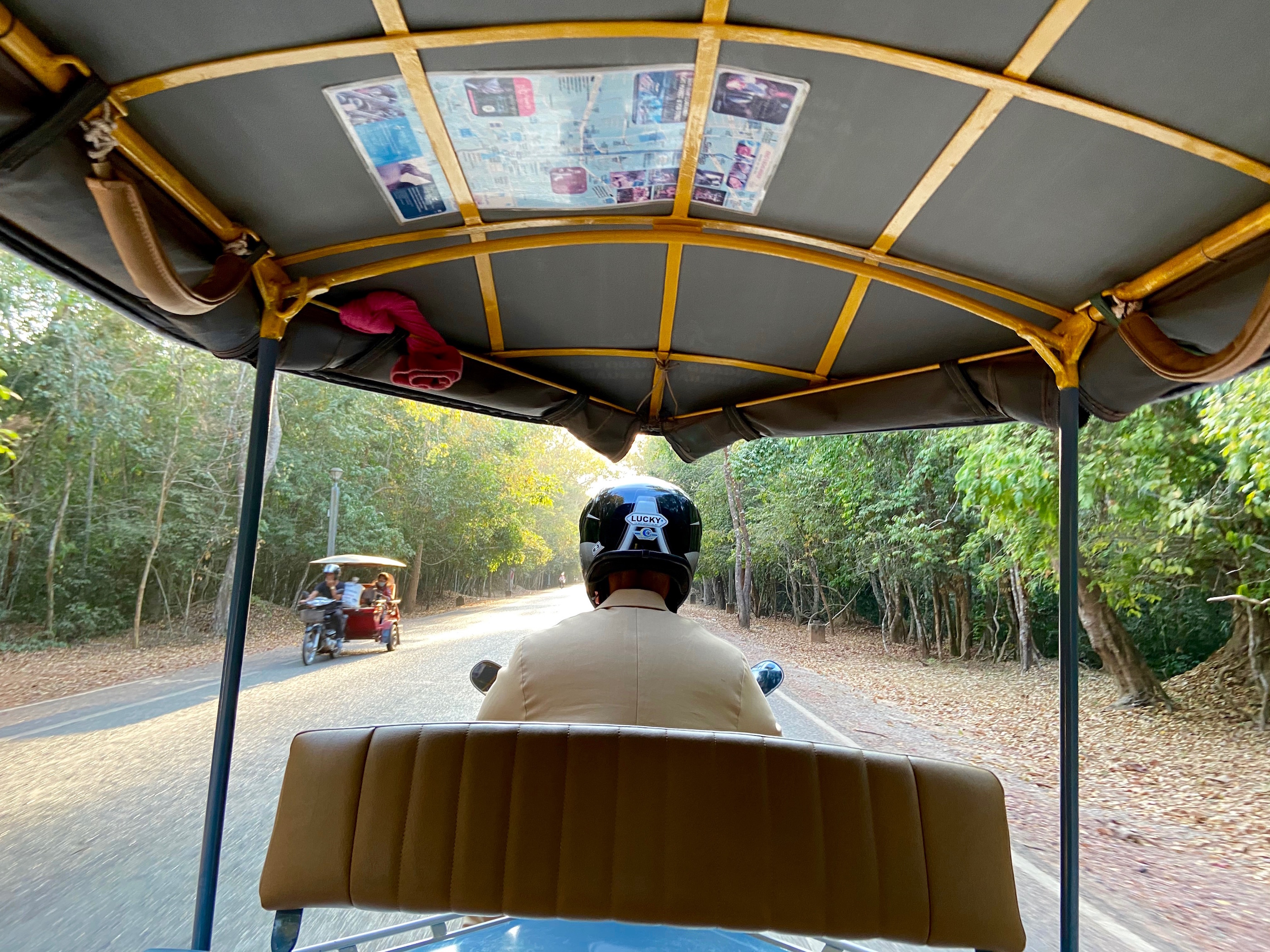
Upon landing we hailed a tuk-tuk to cart us to our hotel. Tuk-tuk styles vary by country, but in Cambodia they’re most commonly a two wheeled cart pulled by a driver on a moped. Riders toss in luggage, hop into bench seating and take off. It’s an unfussy, open air, non-seat-belted transit experience that’s fast and efficient, albeit lacking in safety features. As an anxious person, I wasn’t sure I’d be able to handle the ride, but tuk-tuking in Cambodia has become one of my more cherished travel memories. I watched our driver’s shirt back fill with wind as we ducked in and out of traffic while passing dozens of other tuk-tuks with passengers who looked just as jet lagged and sweaty as I did in the 80 degree 9:00AM heat.
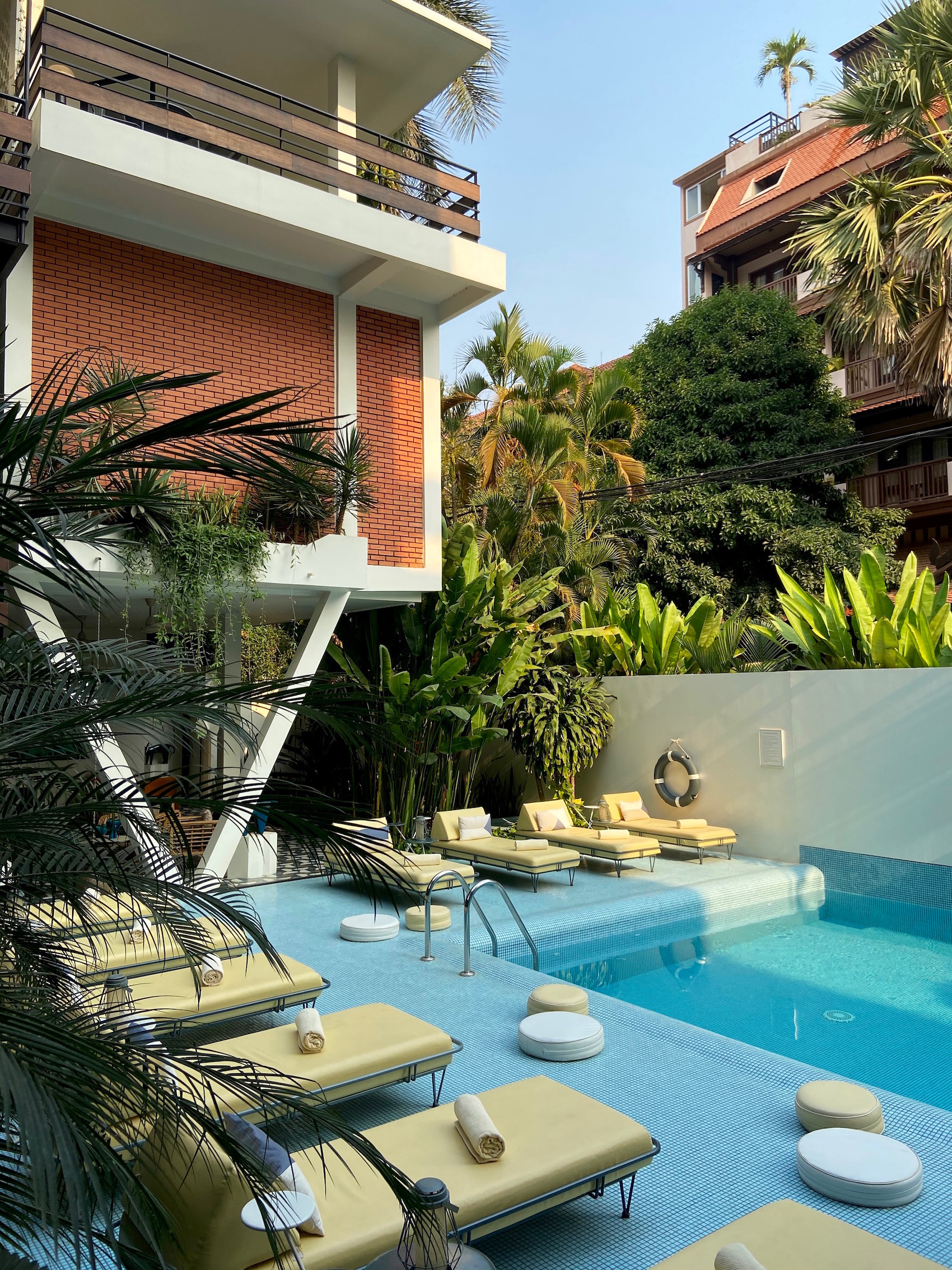
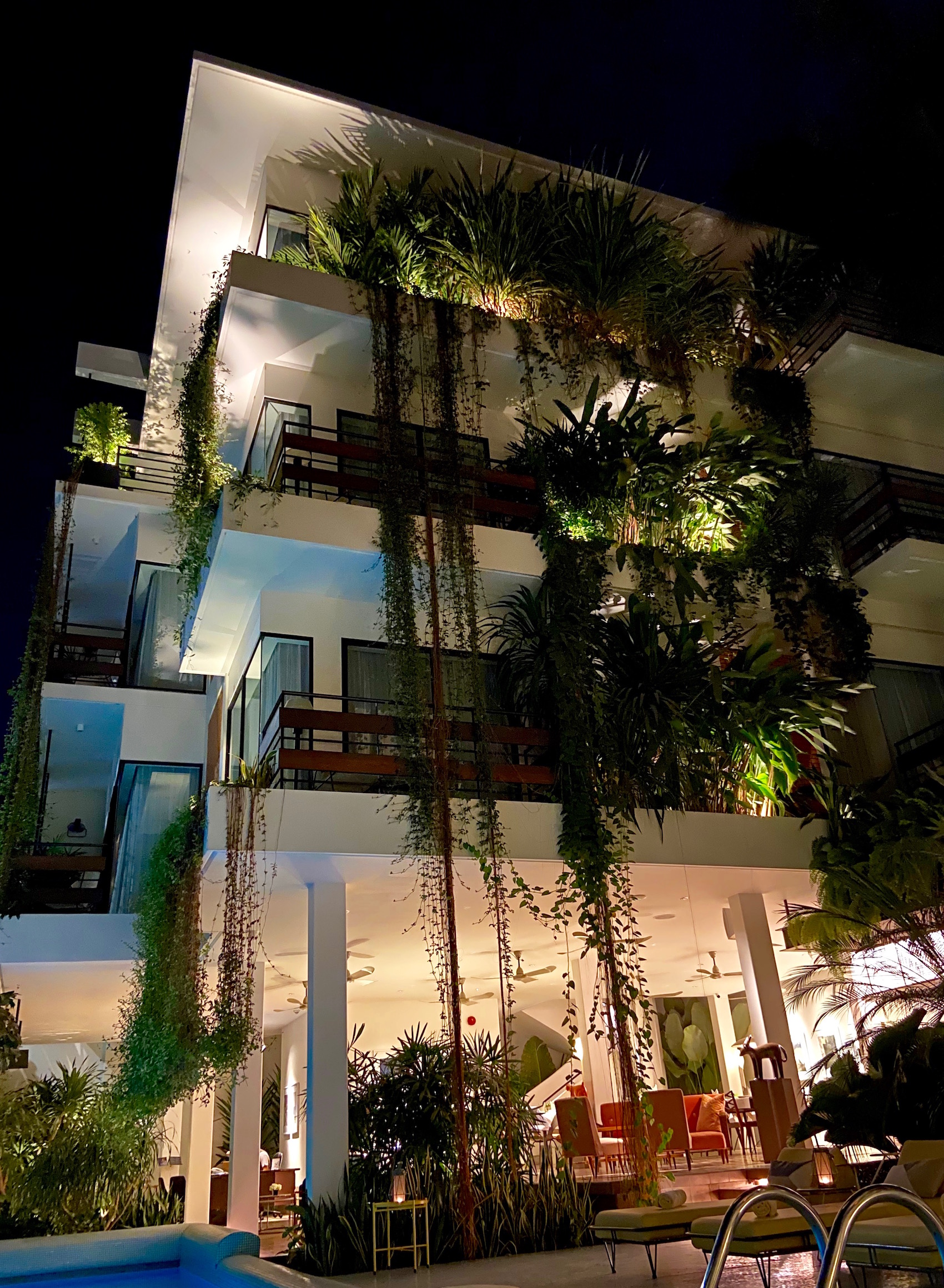
Siem Reap is a place where lodging can cost as little as $3 USD per night, the same cost as our 20 minute ride from the airport. I splurged by spending $110 a night on Viroth’s Villa in the old city and was blown away by the oasis it was. Once we entered we walked through an open air dining room and passed by a pool area that Instagram influencers would drool over. The courtyard is dotted with palms, and ferns drape the stairwell. It’s a splendor of art deco prints and a color palette of cobalt, canary yellow, millennial pink and emerald green. I’d describe the overall decor as “jungle Palm Springs.” If I were to try and emulate the style in my own home it would come off as a garish visual cacophony, but here everything is perfectly balanced.
One of the tradeoffs in staying at a more high end spot is that the attention lavished on guests can become overwhelming. Walking from our room to the front desk half a dozen employees would bow as we passed and give us wide grins that exposed as many teeth as possible. We’d ask the front desk to call us a tuk-tuk and in the five minute wait were offered something to drink and sunscreen. I took them up on the latter and immediately felt uncomfortable when two individuals hosed me down from head to toe with aerosol spray.
When the tuk-tuk arrives we communicate with the driver via Google maps. Given that it’s 1PM and temperatures are over 90 degrees, we’re forgoing a temple visit until later in the day and starting with a trip to the Mekong Ganga Cooperation Asian Traditional Textiles Museum.
The museum is outside of downtown located off of a major road. It’s not the kind of place you can hail a tuk-tuk from. Once we arrive we request as best we can without getting lost in translation that our driver will wait for us. He smiles and nods and we feel moderately confident that we’re all on the same page. We also take the opportunity to introduce ourselves by way of placing our hands on our chests and saying our names. Chaum, he says, doing the same. Chaum we repeat and all grin.
In the comfort of air conditioning we eye up traditional clothing from Southeast Asia. I’m transfixed by the gorgeous weaves used to create elaborate saris, sampots and sarongs. Carl goes absolutely giddy with excitement once we enter a room with a massive loom showcasing the ikat technique, a method of resist dyeing wherein groups of warp threads are tightly bound together on the loom to allow the exposed thread to be dyed. This process is repeated over and over again until a pattern is complete. It’s a slow process that originated in Indonesia and has spread throughout Asia. It’s an almost watercolor-like print that looks like it’s bleeding or weeping.
At home in Pittsburgh we have a large loom passed down through generations in Carl’s family. His great great grandmother used it to weave the textiles she’d create all the household clothing with. He lovingly refers to it as his heir-loom and has hunkered down at it to create baby blankets and scarves for family members. For him, a loom sighting is a pretty big deal.
Once the heat of the afternoon had passed we left the museum and felt immediate relief seeing Chaum waiting for us in the parking lot. We veer off the four-lane roads and enter the jungle to visit our first temple. On route we pass a gas station consisting of two dozen repurposed cola and liquor bottles half-filled with gasoline, sitting on a wooden shelf and left unattended in someone’s dirt driveway. A few houses down I see a kid doing backflips in his front yard. He’s wearing a full-bodied Spider Man costume that leaves only his feet and head exposed. Even in the most foreign of places the kids just want to be super heroes.
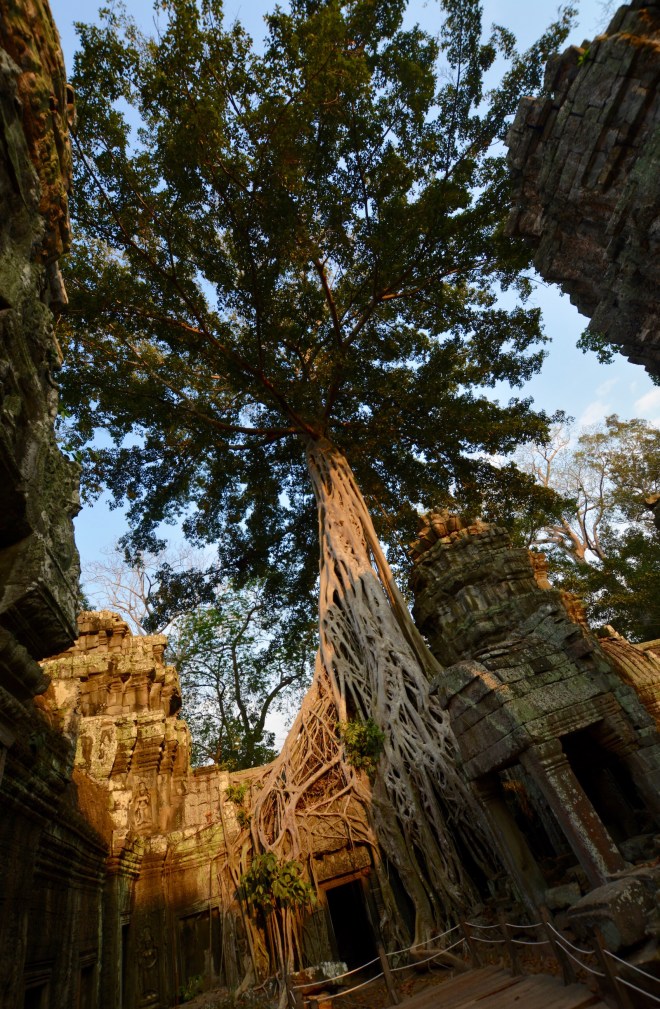
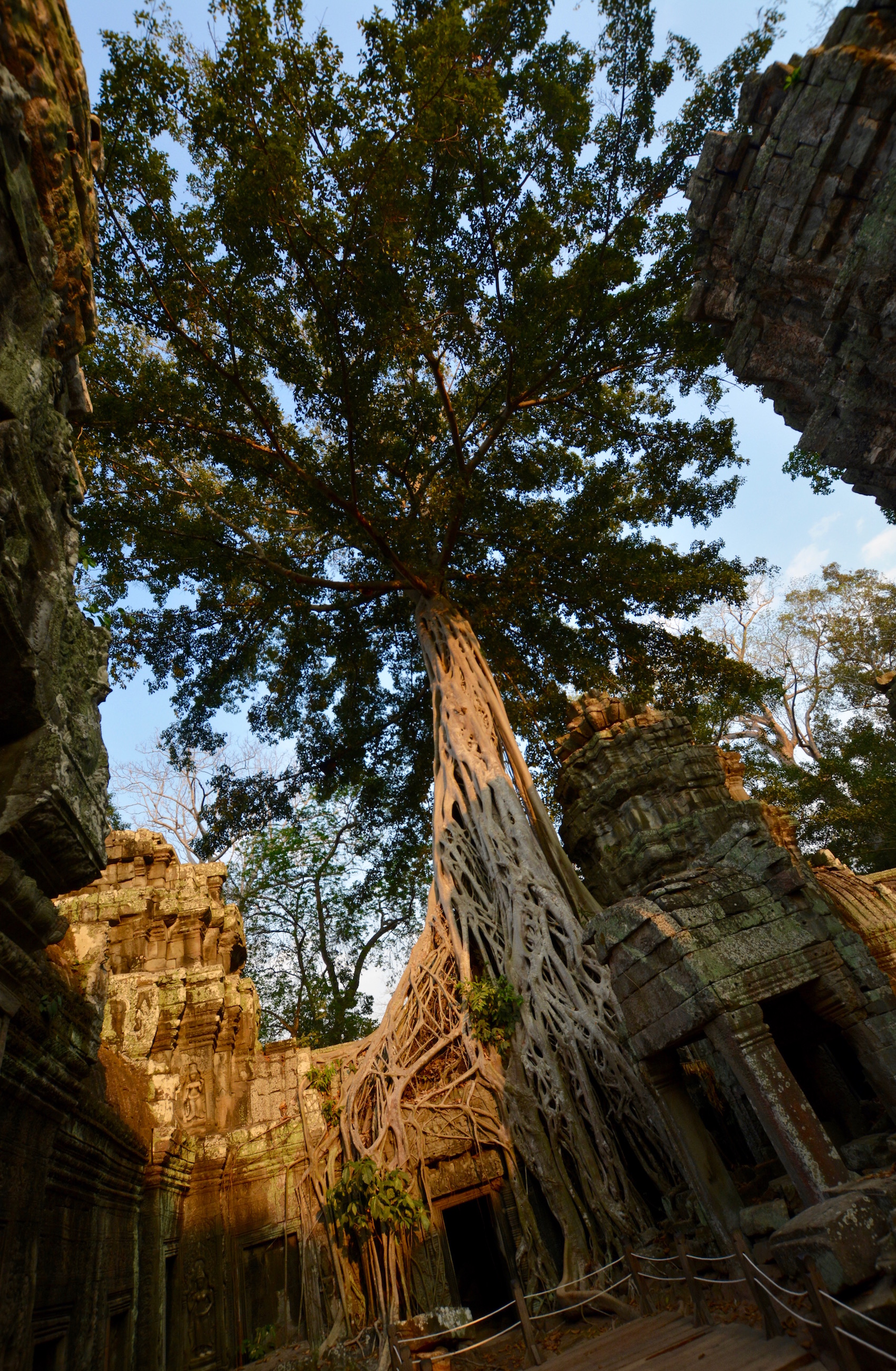
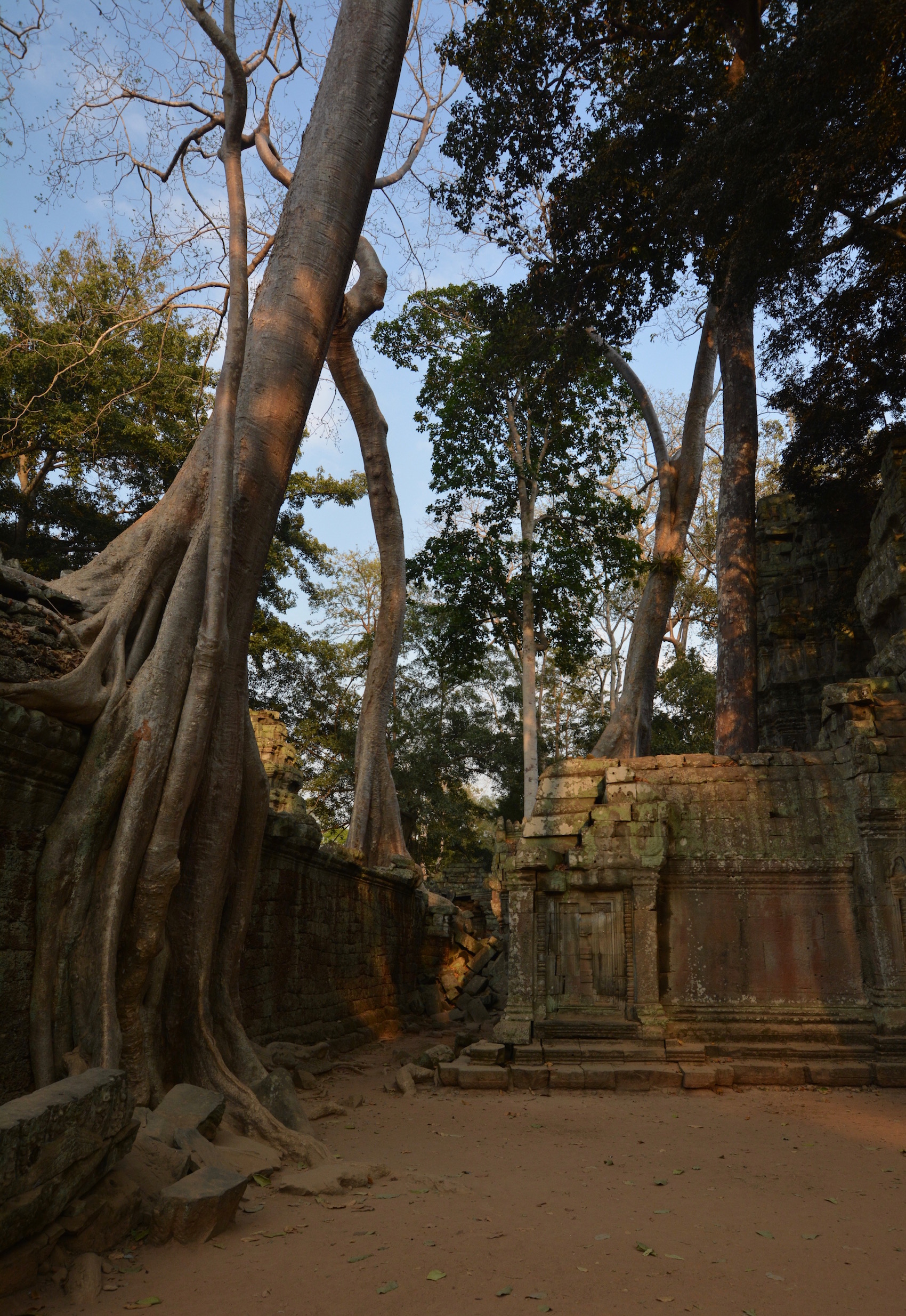
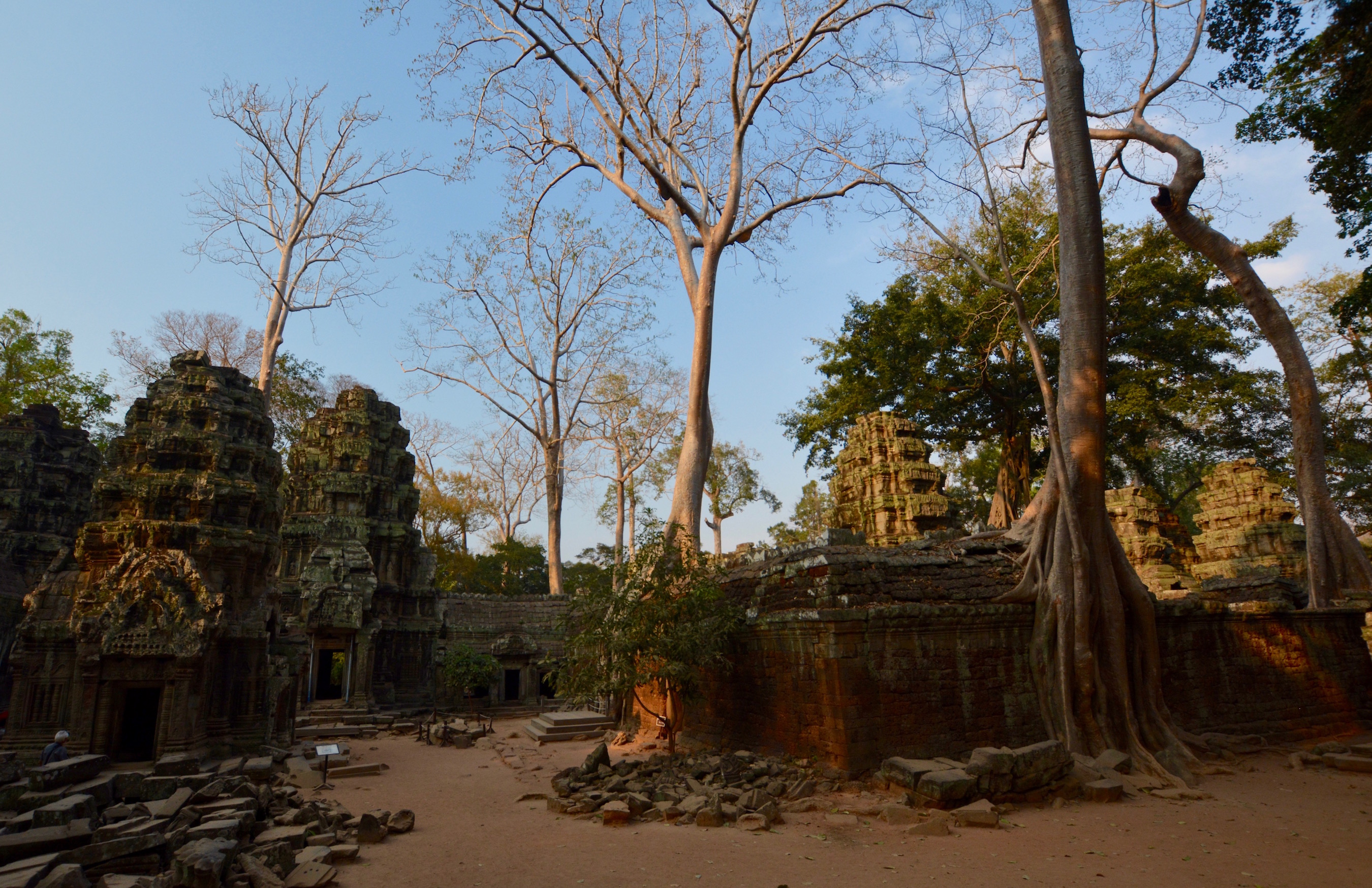
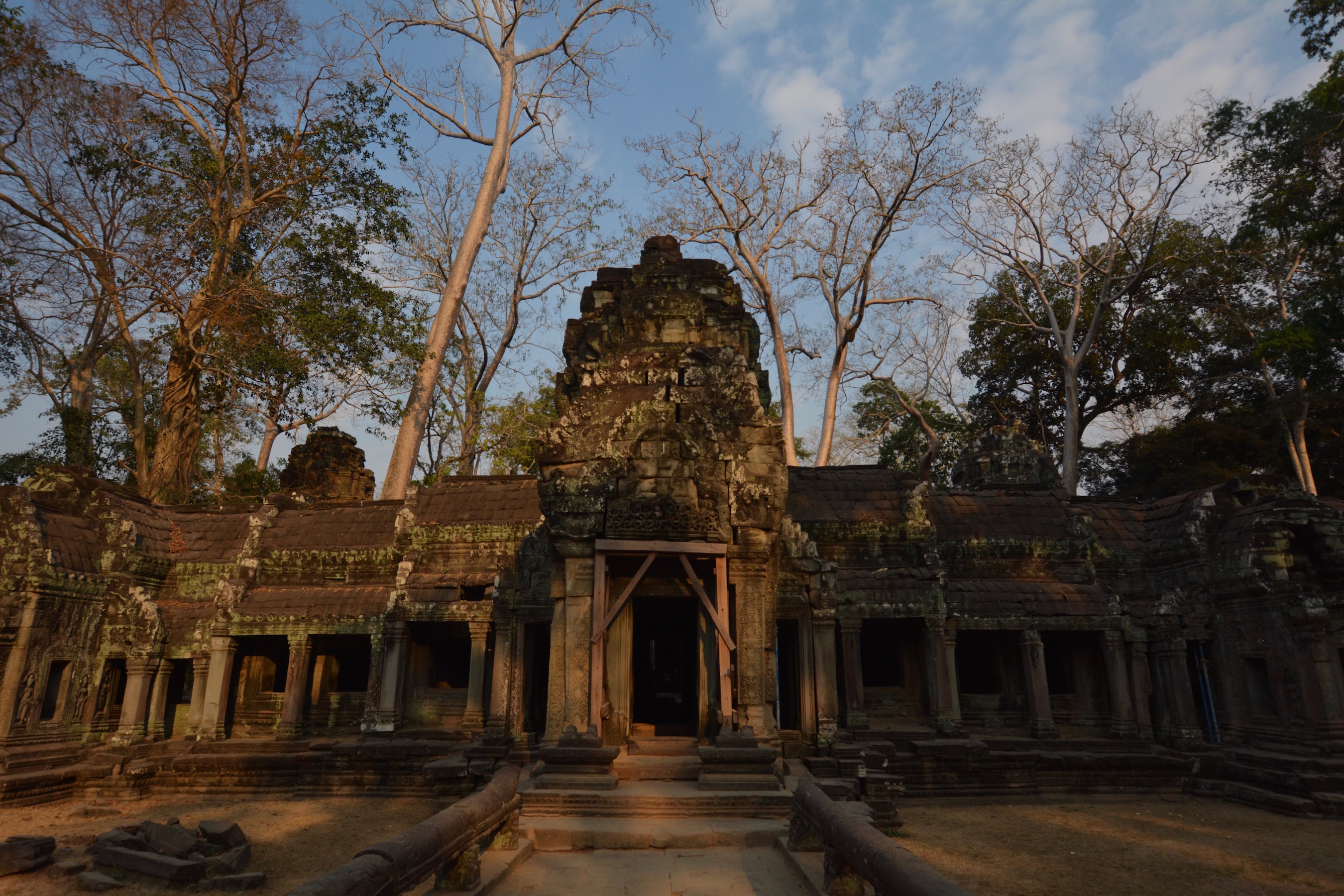
We arrived at Ta Prohm, an 800 year old temple. Built without mortar and abandoned in the 15th century, trees have since taken root in the crumbling stone walls. If ever curious what the fall of an empire looks like, look not to the Colosseum surrounded in gelaterias and espresso bars; look to the jungle reclaimed Ta Prohm.
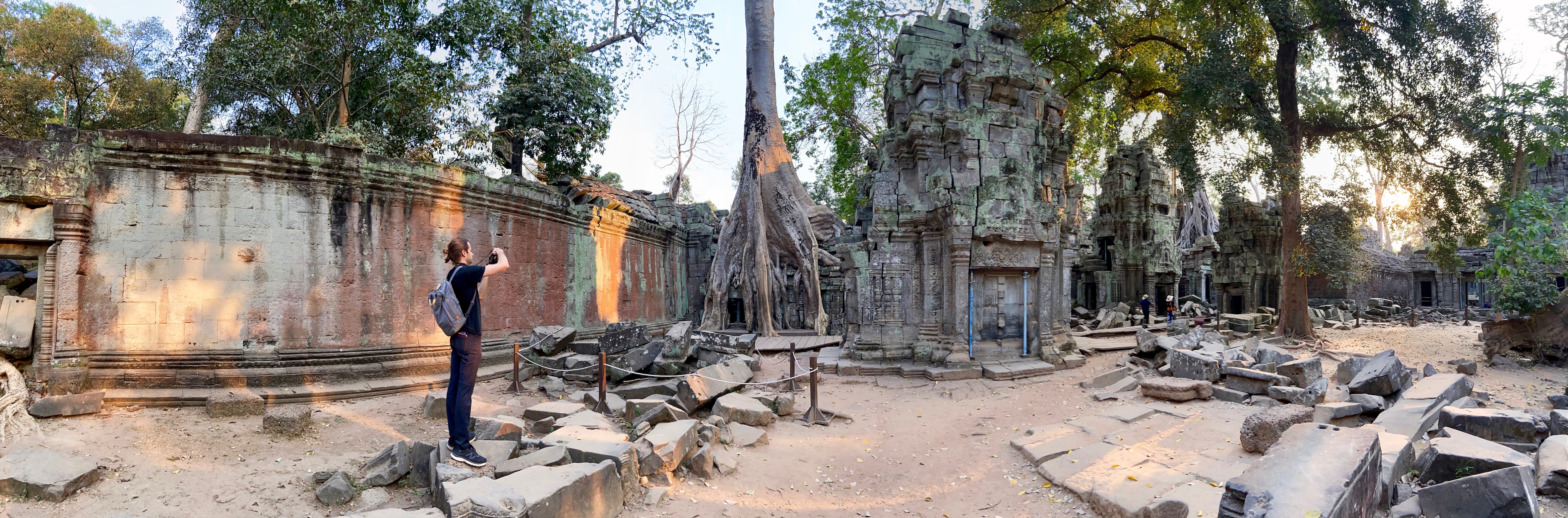
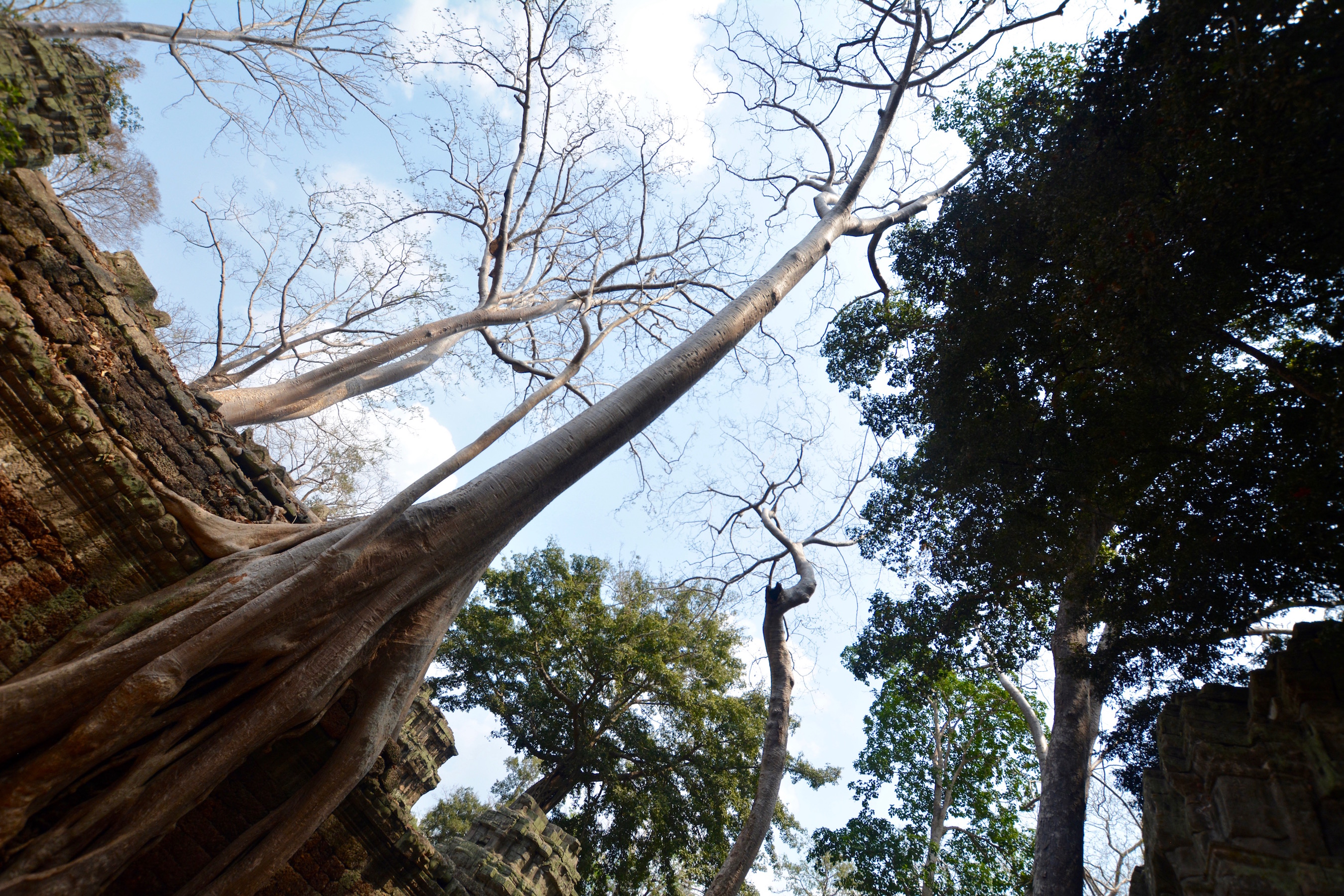
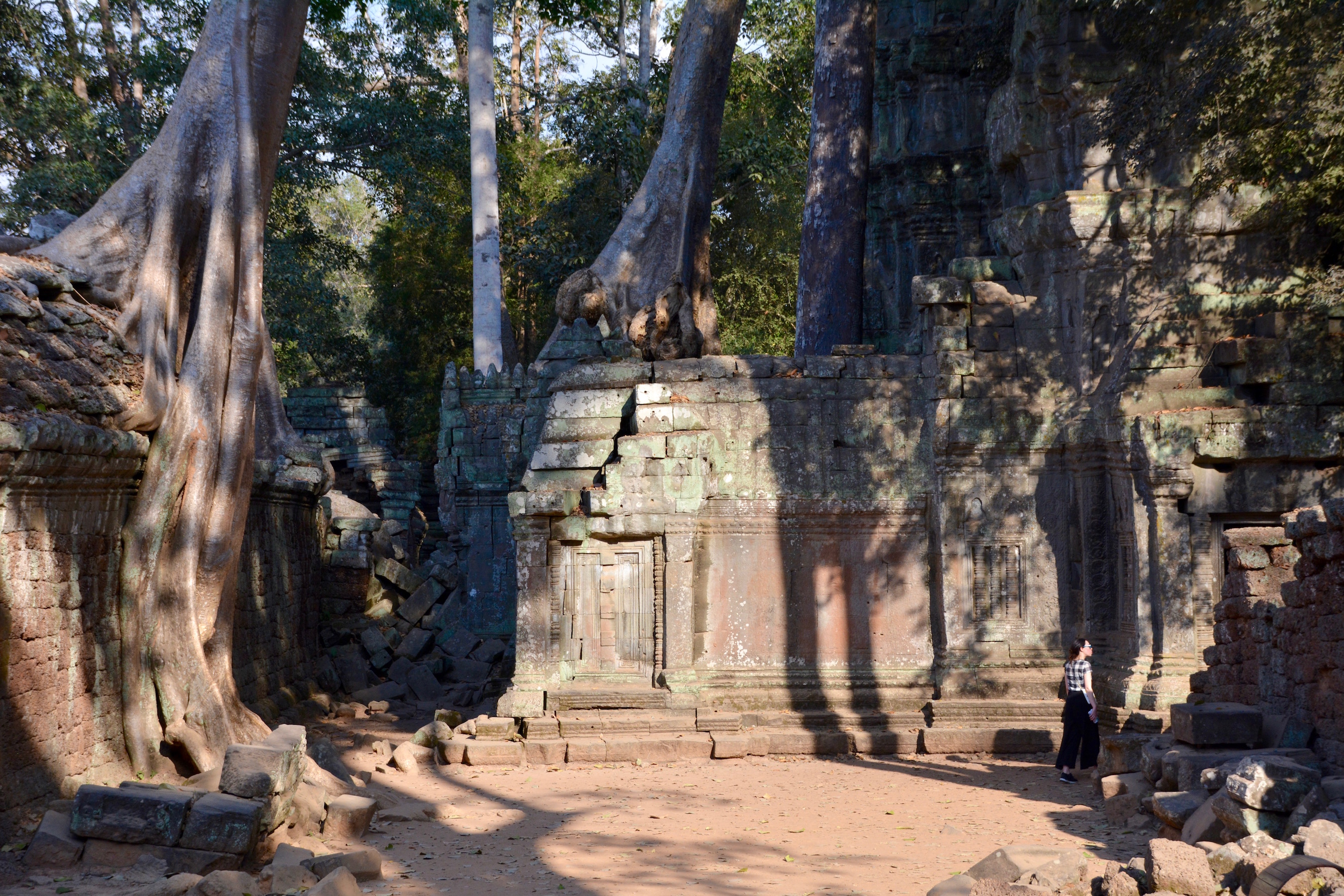
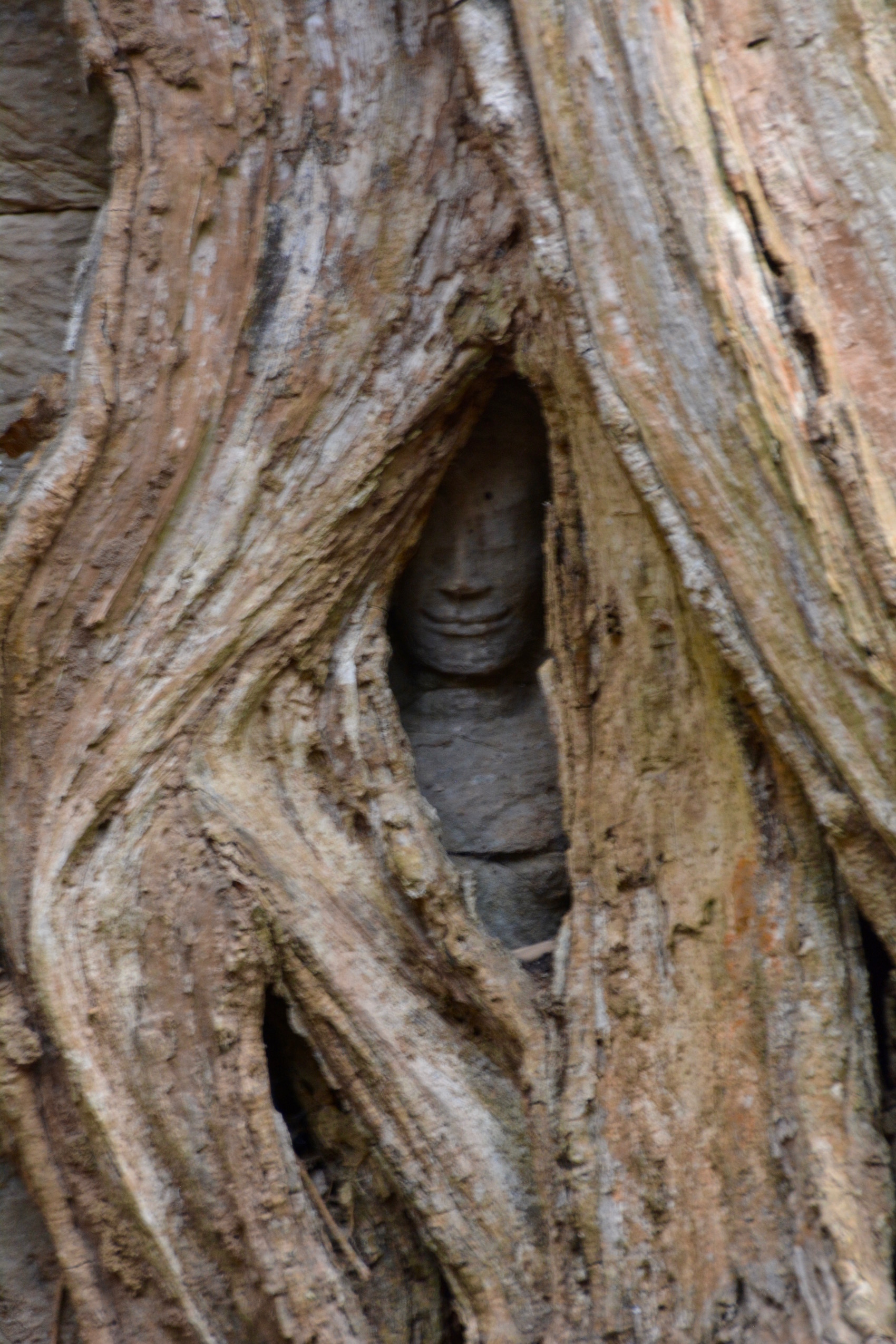
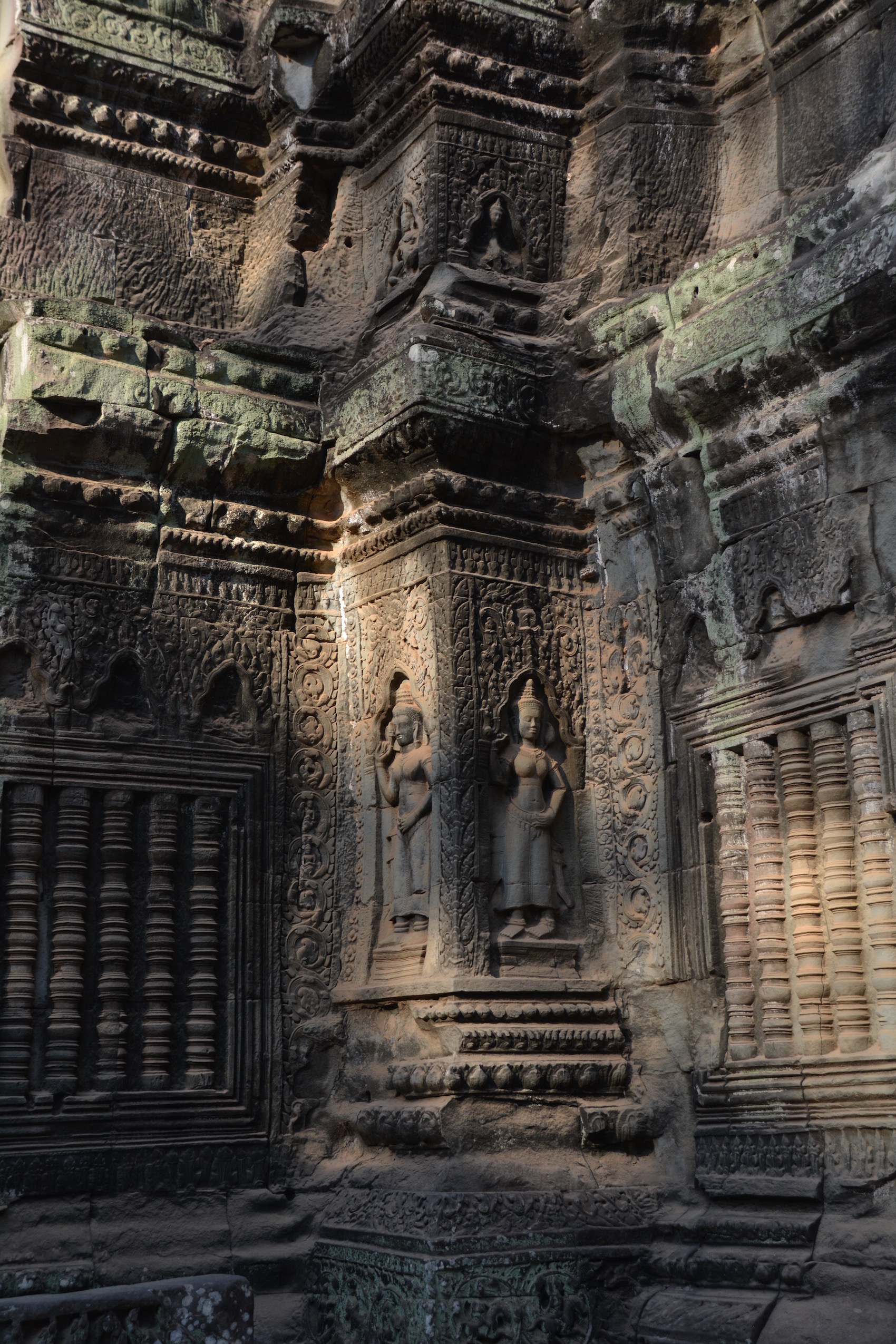
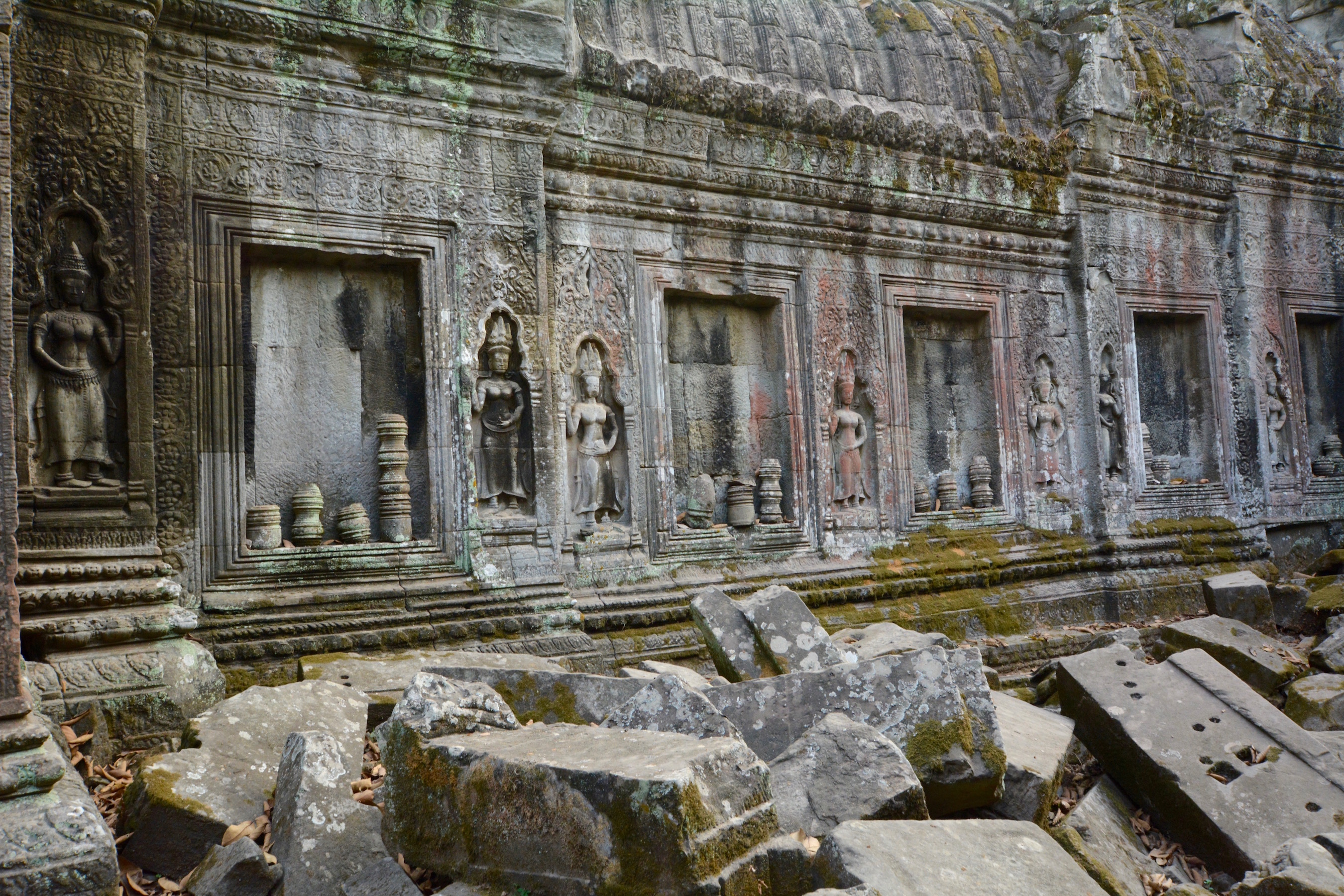
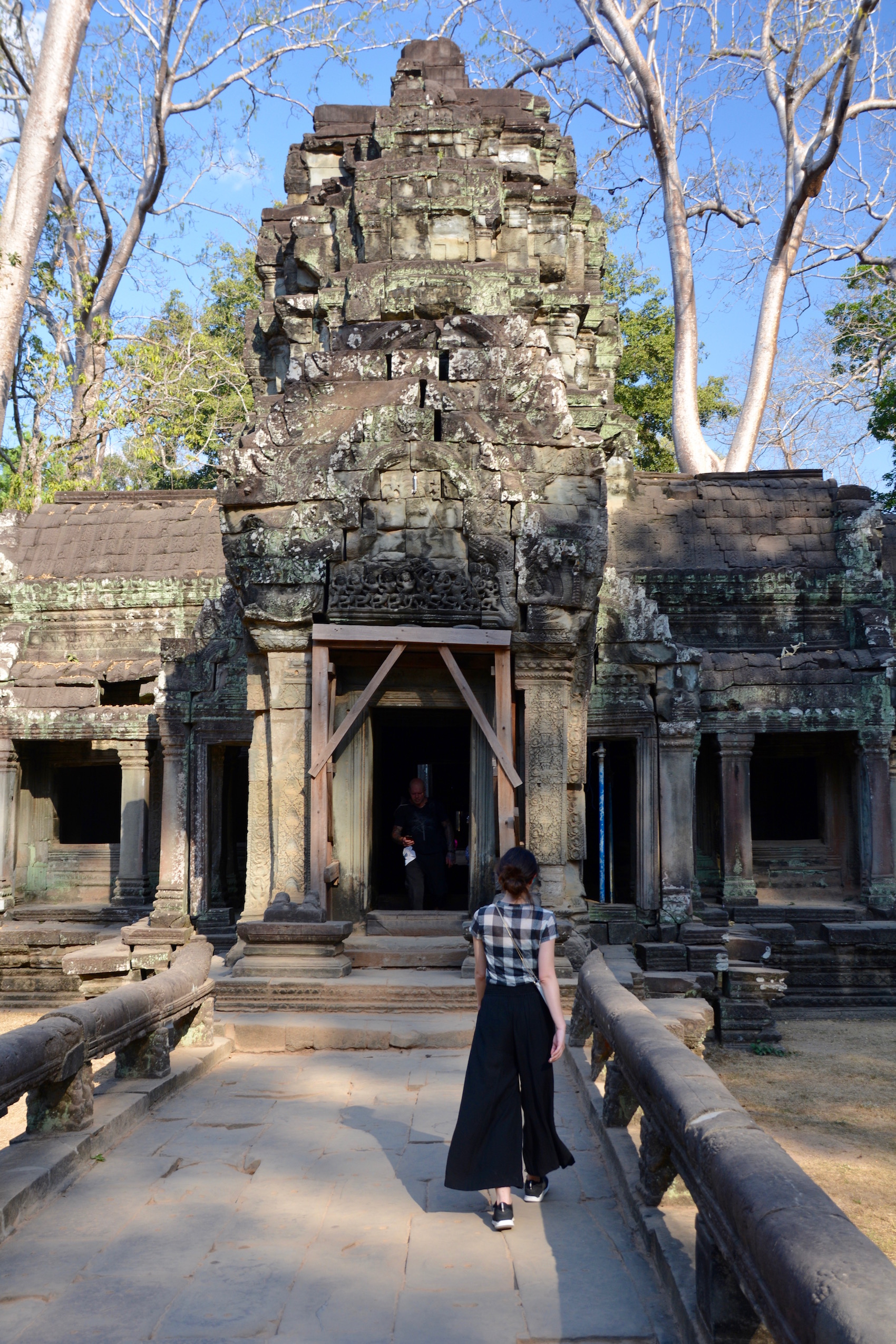
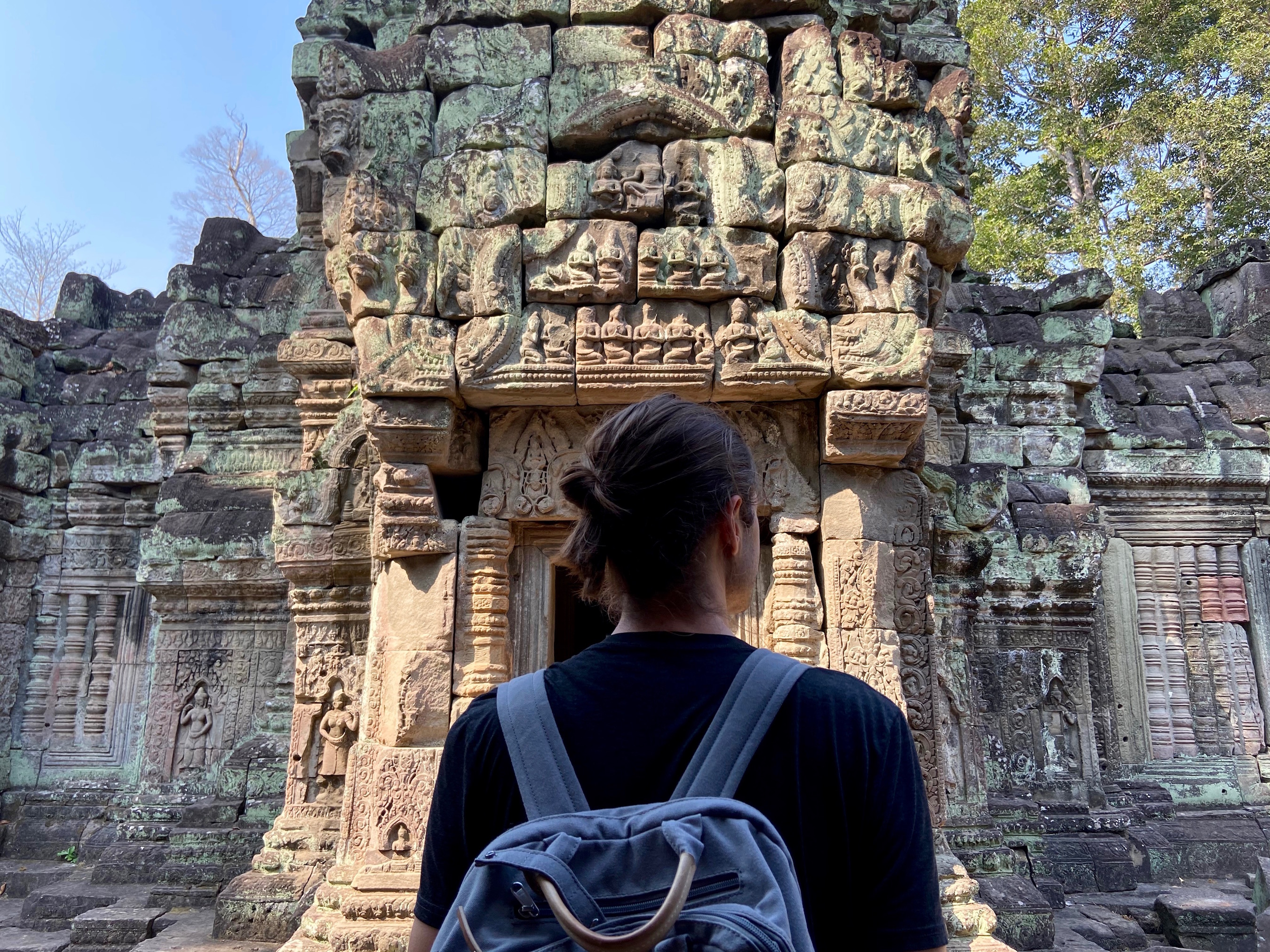
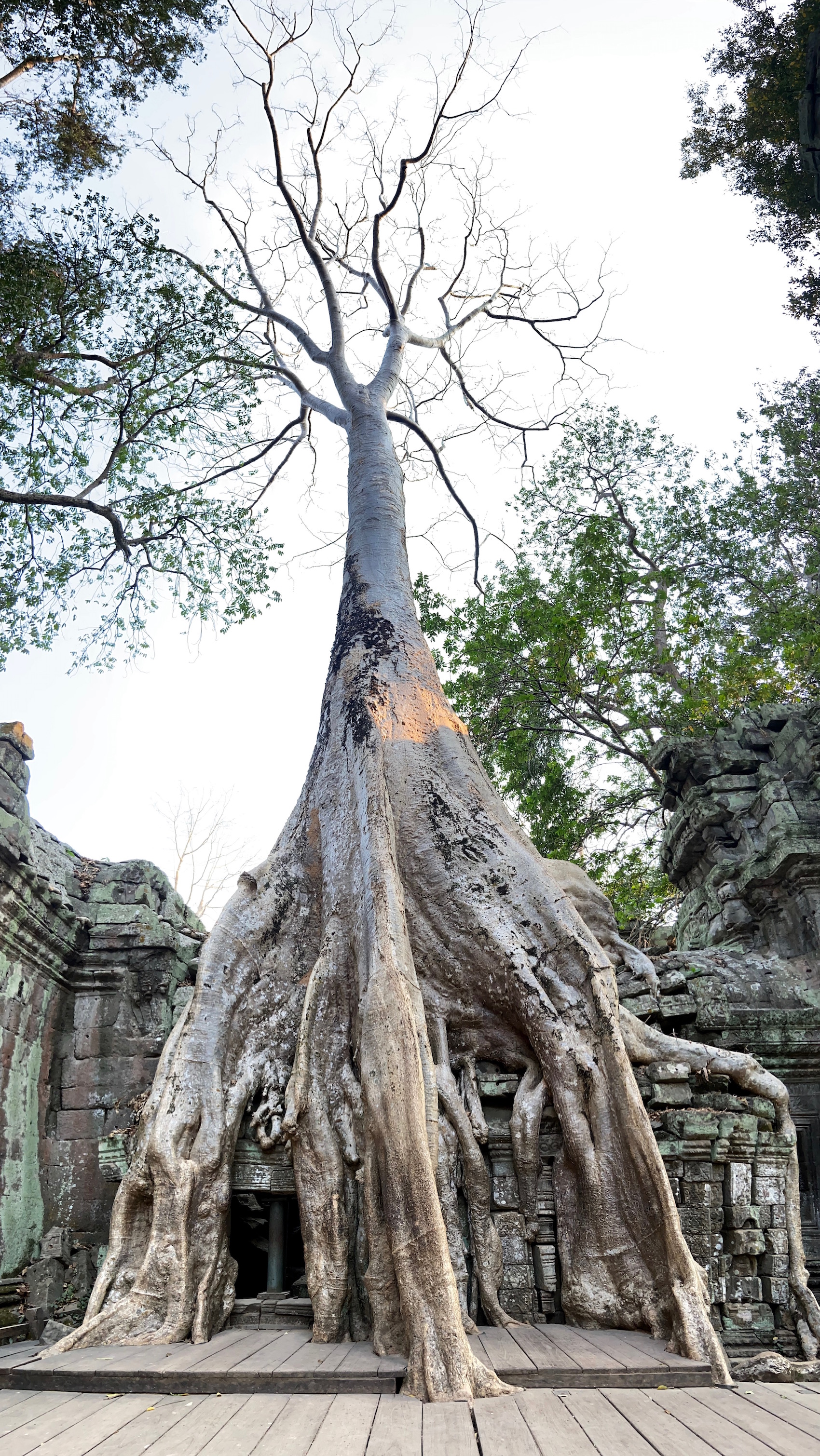
This place is like nowhere else. Massive banyan trees coil up, around, and through collapsed walls like a snake trapping its prey. The banyans rise so tall it’s as if the trees came first and Ta Prohm is slowly pushing out of the earth beneath them. Small wonders are hidden in the roots, waiting to be swallowed up completely in the coming years. An elaborate pattern carved into the rock so precisely it looks like a screenprint, or the face of a dancer, barely visible. While the jungle continues to grow the temple remnants have nothing left to do but crumble.
It’s unsettling seeing how easy it is for the memory of man to be erased and empires to fall. For impossible wealth, so seemingly impenetrable today, to be reduced to a heap of rocks. But the beauty is undeniable. In Ta Prohm the heaviest stones are fragile.
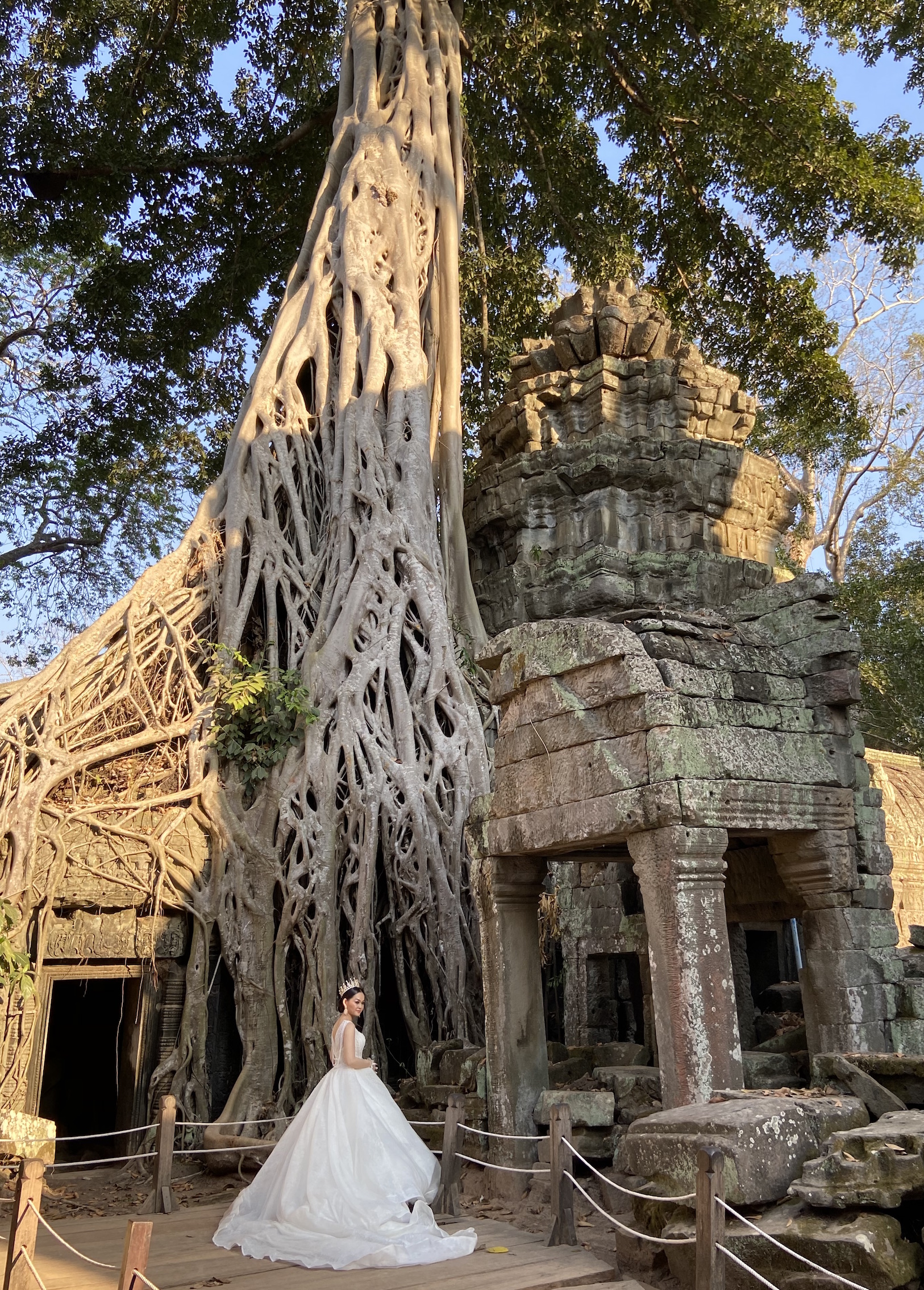
We turn a corner and see a wedding photoshoot. The bride wears a tiara and a pristine white dress. She stands with the world eroding around her. A permanent smile on her face. Queen of the ruins.
In the dirt parking area we’re immediately swarmed by children no more than ten. “Three for one dollar!” a tee shirted boy yells in a refrain, clutching glossy postcards with a sweaty thumbprint on them. “Fifty cents!” chants another holding up a small board of magnets. As I shake my head no I think of my nephew who’s this age. An average American kid who spends his free time playing Minecraft and Fortnite on a personal tablet. Who’s embarrassed by second hand sneakers and trips to Aldi. How circumstances of place and birth separate what a life is in a myriad ways. Every one is unknowable to us.
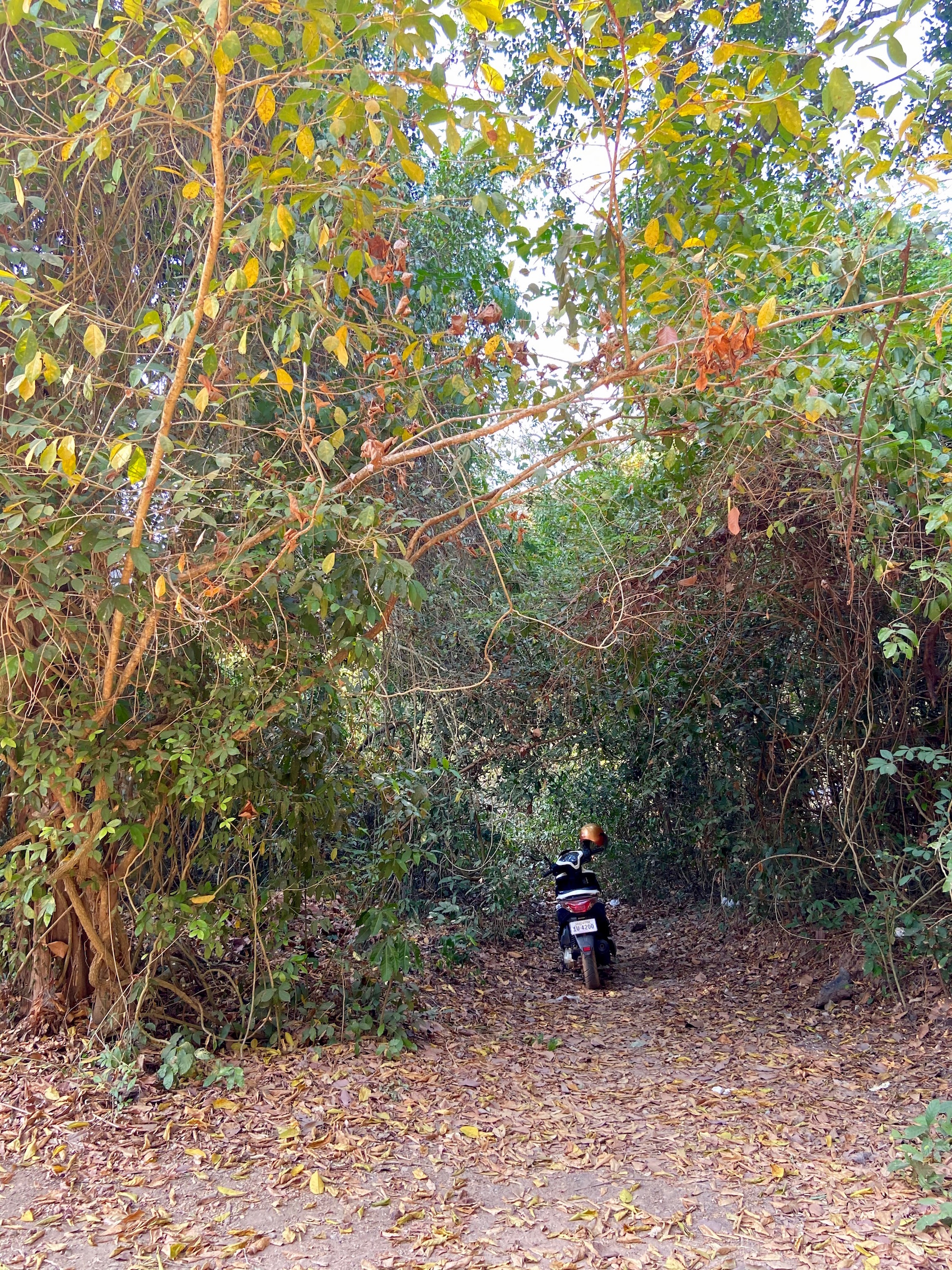
We find Chaum and ride out of the jungle in the witching hour glow, passing baboons running along the roadsides and families picnicking along the Siem Reap river. Back at Viroth’s we ask Chaum how much for the day. Five dollars. He’s been with us half the day and made everything so smooth, so friendly. We made a plan with him. If he meets us back here at nine the day after tomorrow, we’d love to have his service the whole day, and pay twenty for both days. He agrees and we pay ten today then shake hands and say goodnight. Drivers in Cambodia make roughly $5.00 a day so we figure the exchange is a good one for both parties.
For dinner we walk ten minutes to the downtown bustling with stuff shops and jam packed restaurants. There’s street music and vendors hawking everything from maxi skirts to plastic toys. All is a swirl of color and lights with tuk-tuks zipping from all directions. We’re on the lookout for Cambodian cuisine and land at Khmer Kitchen Restaurant where we order vegetable stew, banana leaf salad and fish amok. Everything is decent and not-so-memorable, but the people watching is a blast.
When we get back to the hotel I have a voicemail from my sister asking to give her a call back. I know this can’t be good and my stomach drops. Our grandfather had just passed away. This is something we’ve been expecting for years now. We’d entered the “it’s for the best” stage months ago. It’s no surprise, but I cry. I cry for the man who was over six feet tall with a voice so booming you’d swear he was a giant. For the man who worshiped his beloved wife, my grandmother. I cry on a bed that isn’t mine, in a city so far from home, in a place that makes it impossible to attend the funeral. My husband holds me and the ferns outside blow in the breeze, unknowing and evergreen.
It’s dark when I wake to a 4AM alarm and groggily dress for a sunrise tour of Angkor Wat. Angkor Siem Reap was formerly known as Angkor, and was the capital city of the Khmer Empire. All of the temples we visit in our Siem Reap trip are Angkor temples, but Angkor Wat is the largest one. Kind of like how many have New York license plates, but only those who live in NYC can say they’re from New York, New York.
Breakfast is included and made to order in our stay at Viroth’s Villa. The prior night we gave a heads up breakfast wasn’t needed as we’d be out before dawn. Ever attentive, as we waited for our tour shuttle reception handed each of us a massive multi-tiered steel pail filled with fruit and sandwiches. As I hopped into the crowded tour van clutching a lunchbox the size of a newborn baby I felt like an awkward and overly pampered school child.
Everyone on board had that exhausted, manic adrenaline rush that happens when traveling. Where you’re sleep deprived but also really excited so you lose all sense of how to navigate social situations. “So I was on the 10:20 from Denver with a connection in Atlanta. I rewatched Infinity Wars on the second flight, fell asleep for a few hours then landed yesterday at 3:07PM. I graduated Summa Cum Laude from the University of Boise. I love chicken salad, but can’t stand egg salad. Ever since I saw Lara Croft in high school I’ve been interested in visiting Cambodia and wow, now that I’m here I can’t wait to see Angkor Wat. What about you? How’d you hear about this tour and what’s your relationship with your parents like?”
Just before dawn, vendors are setting up souvenir stalls under harsh yellow lights while the black sky turns plum behind them. Carl and I felt that a sunrise tour would be the way to go to avoid the crowds. This was a foolish assumption. Hundreds crowd around the lake in front of the temple entrance, all waiting for the perfect shot.
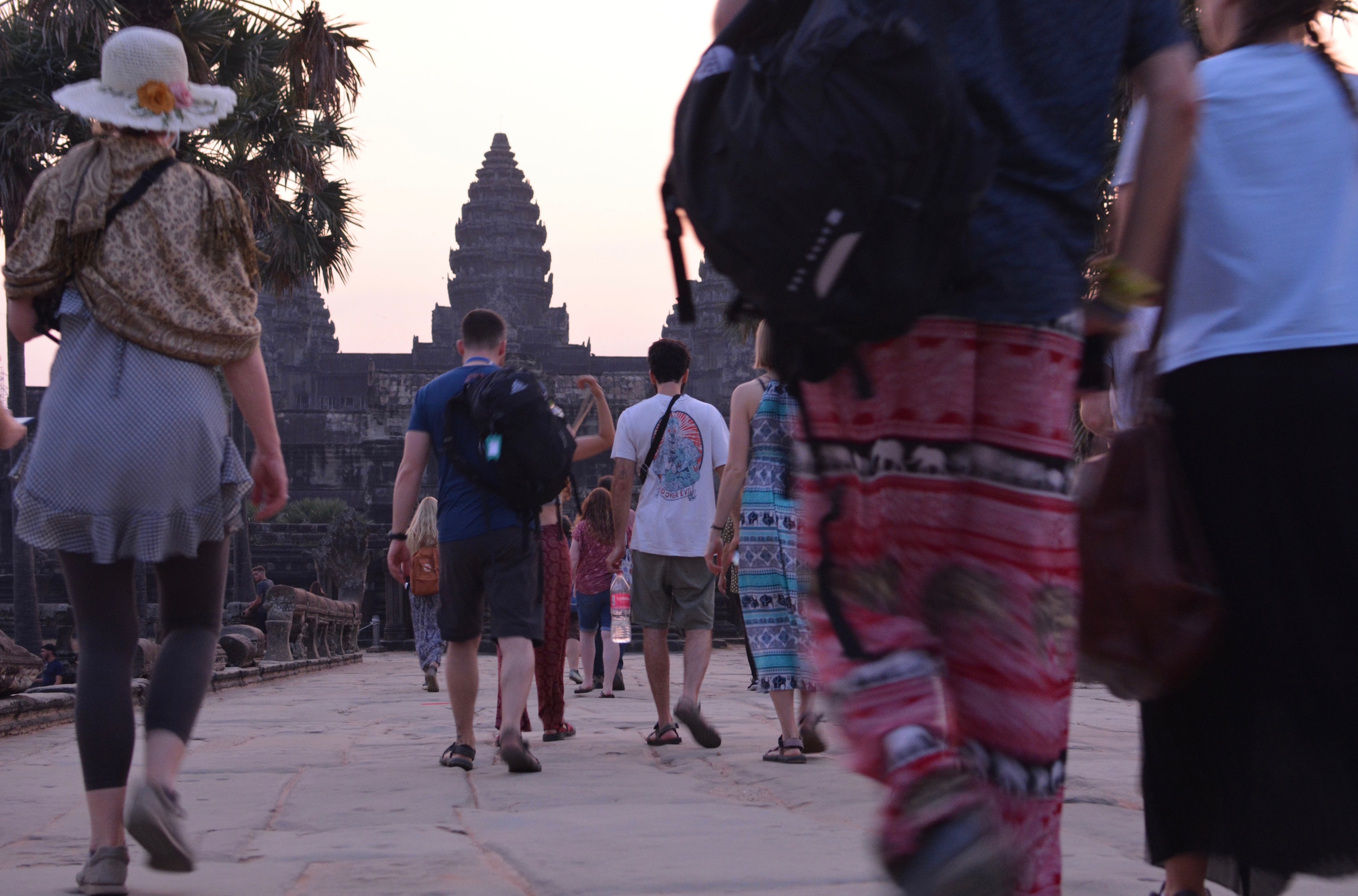
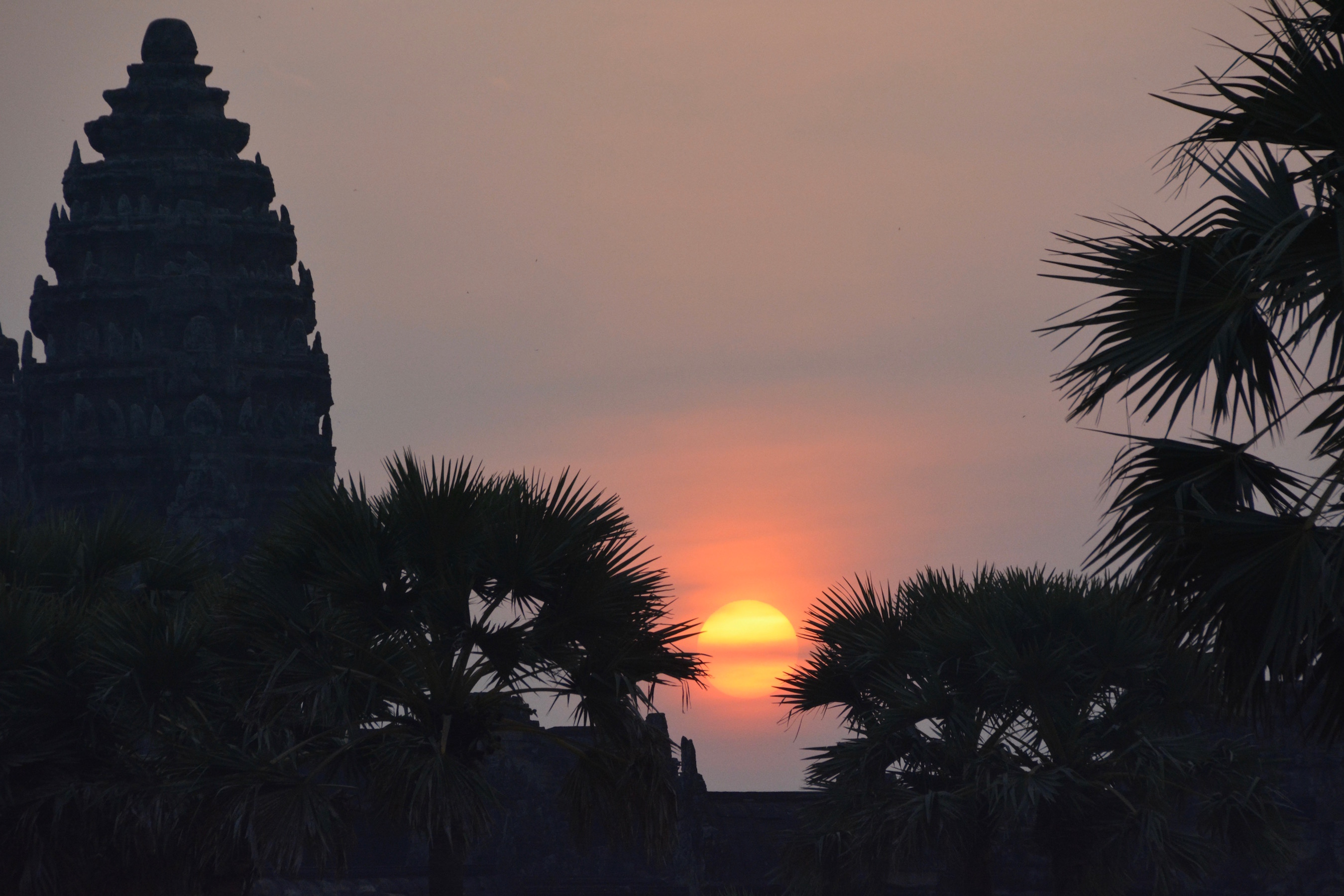
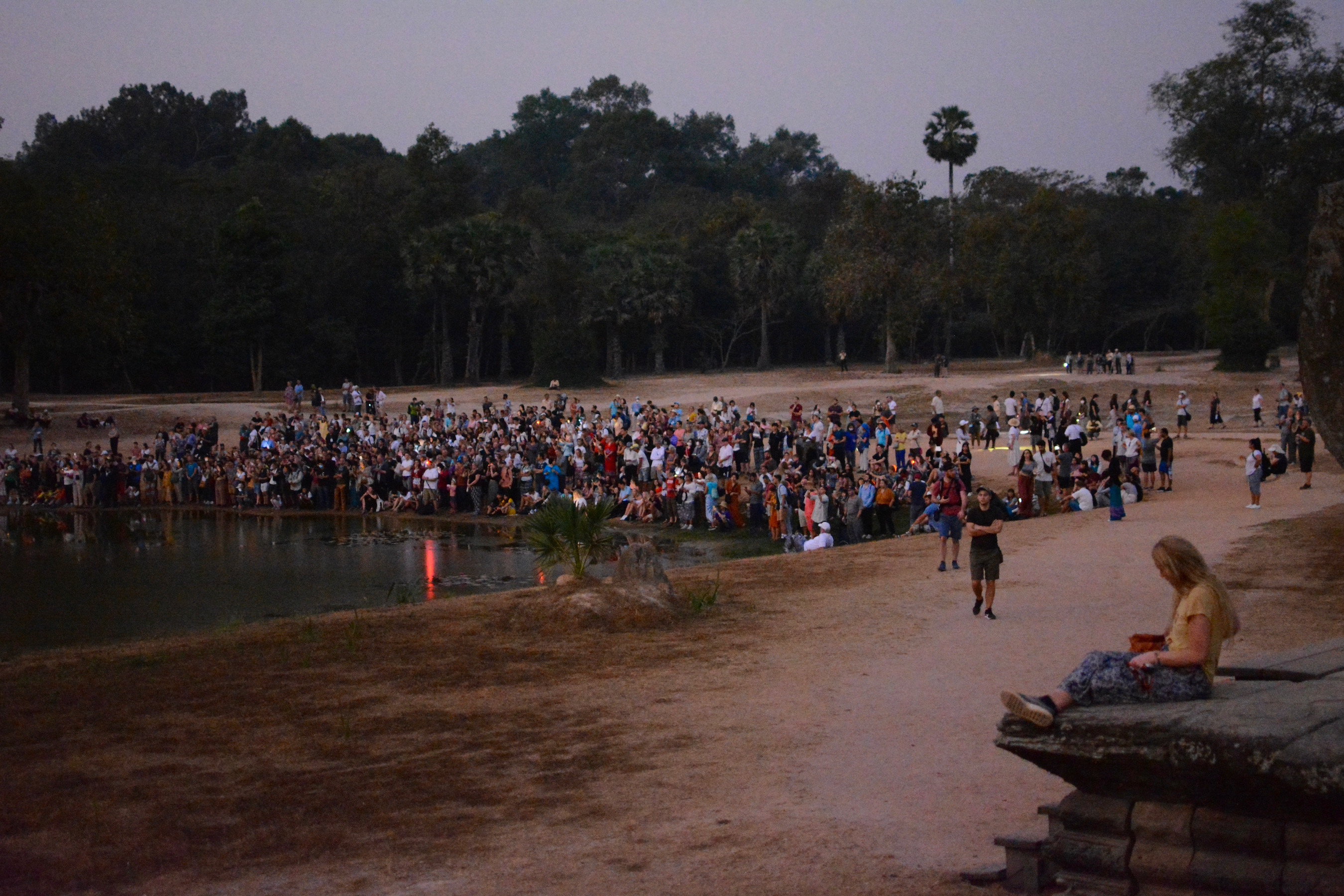
My favorite part of being here at this moment is the people watching. Some wait peacefully, no phone or camera in hand. Some stare aggressively at the temple wanting something more. Something intangible and unknowable. Something that sounds like “I traveled a thousand miles to be here at this moment. Provide me clarity of mind now, dammit”.
I cannot judge. I also make the false assumption that wherever I go a layer of my soul will be peeled away, exposing something more pure and relatable. More profound. This never happens. I’m not met with inner peace. I don’t find myself. Maybe some do. Maybe once you summit Mount Shasta you’ll have the ironclad realization that you’ll be reborn as a ferret in Nevada or one of Kendall Roy’s adopted children. Maybe that’s for my next trip.
Instead of finding myself I witness others. I watch those around me. This is how I feel more cemented in my place on earth. I see children in jungles dream of being Spiderman just as the children in Pittsburgh and Philadelphia do and I love that.
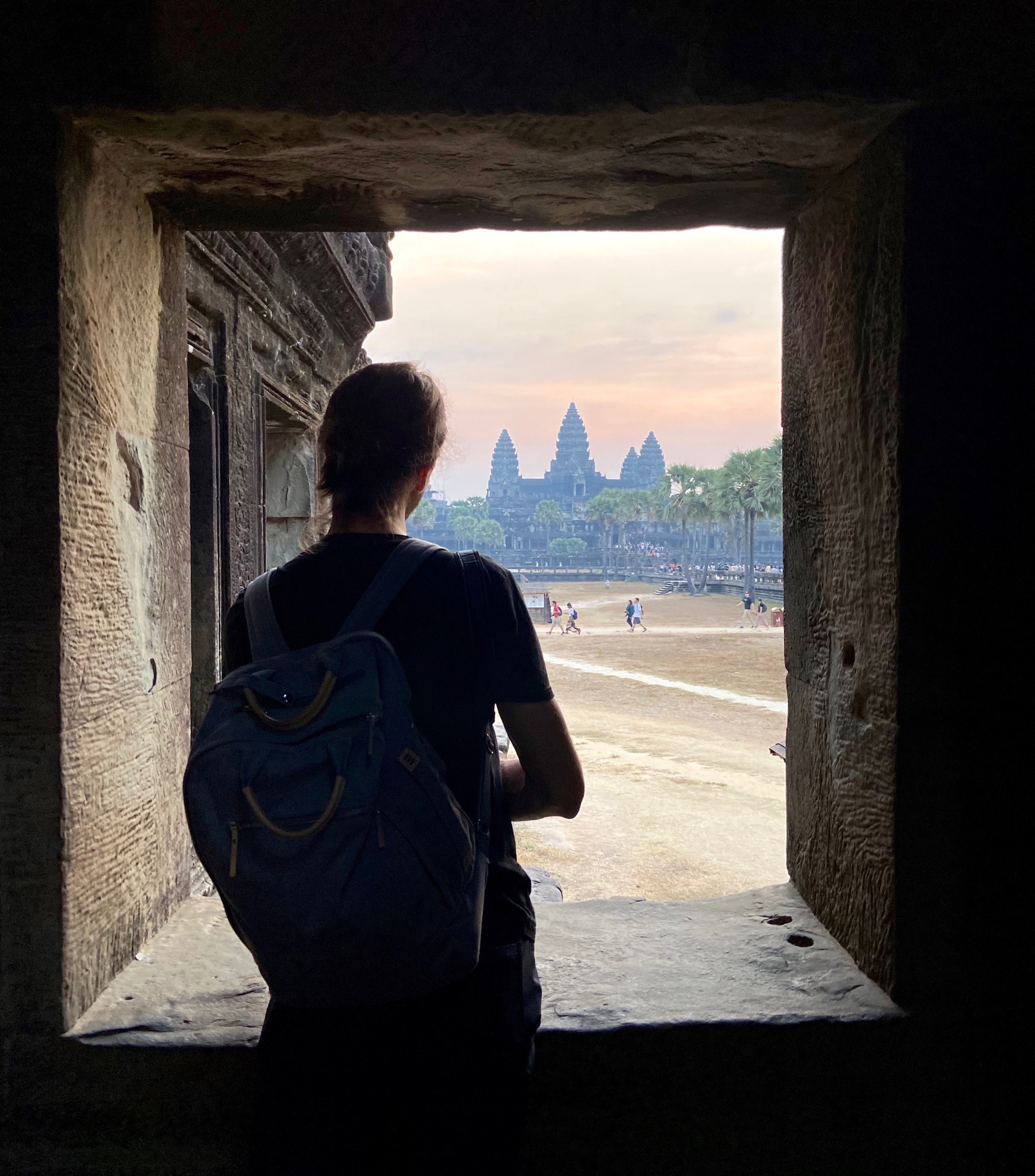
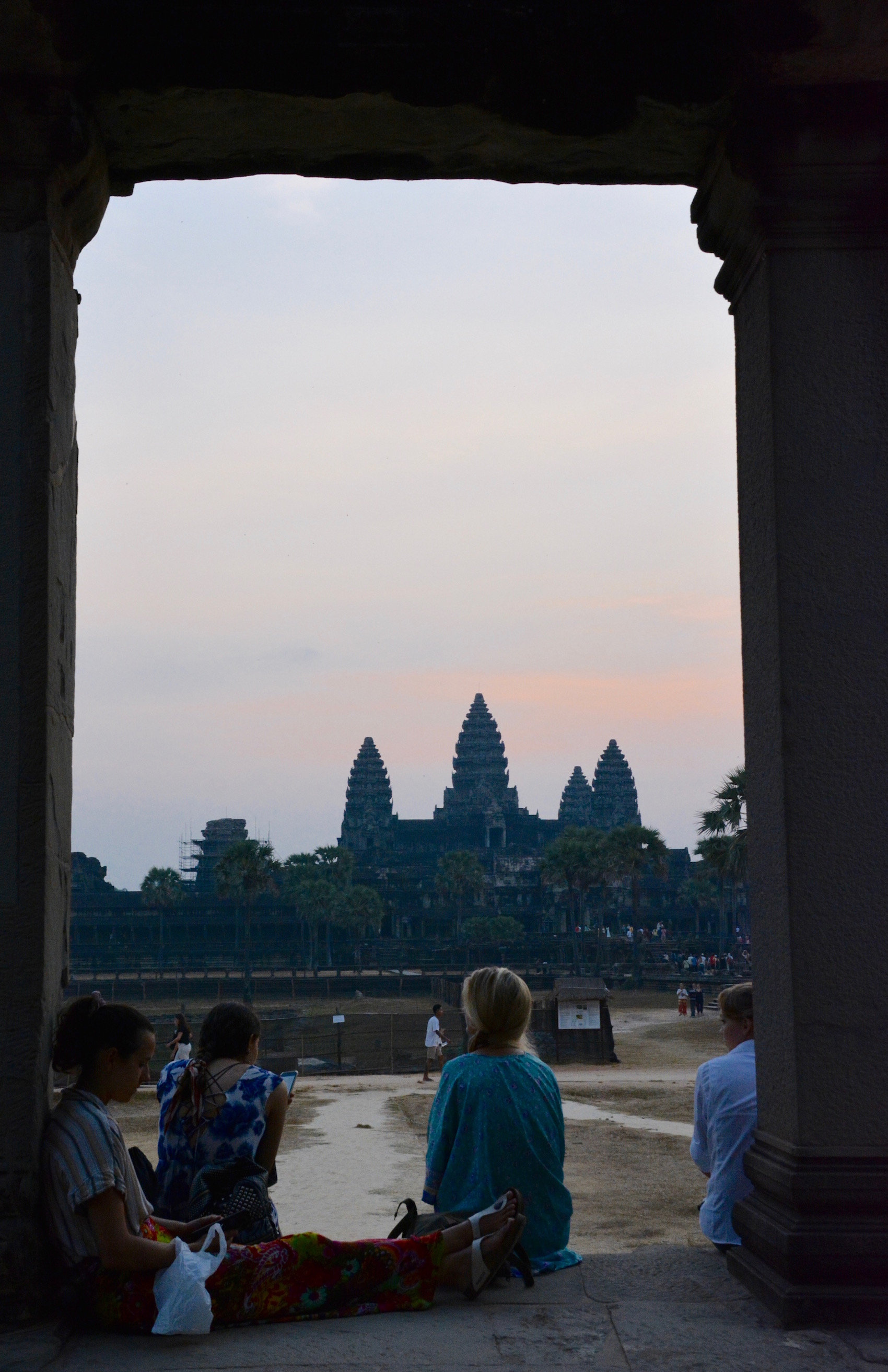
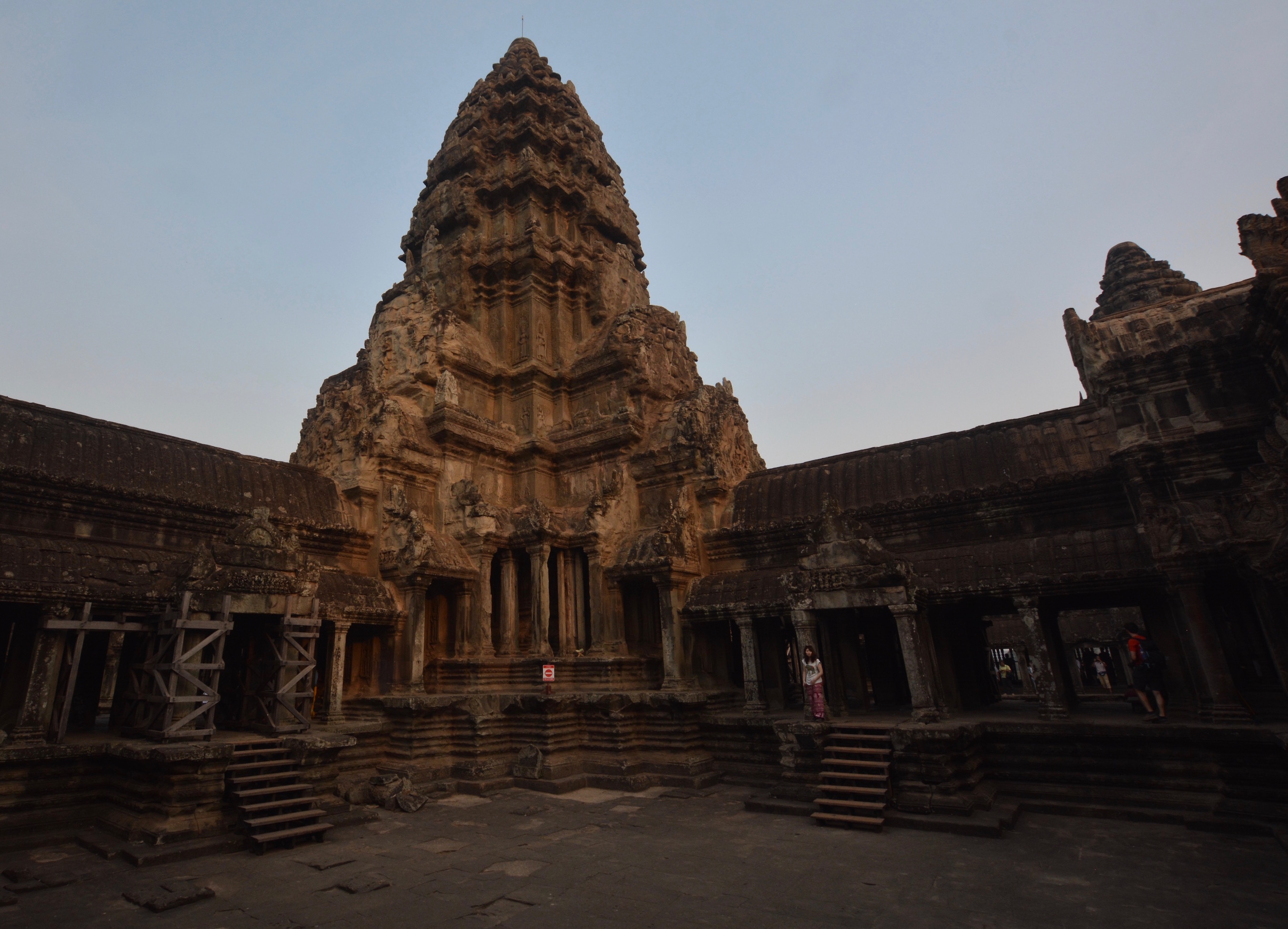
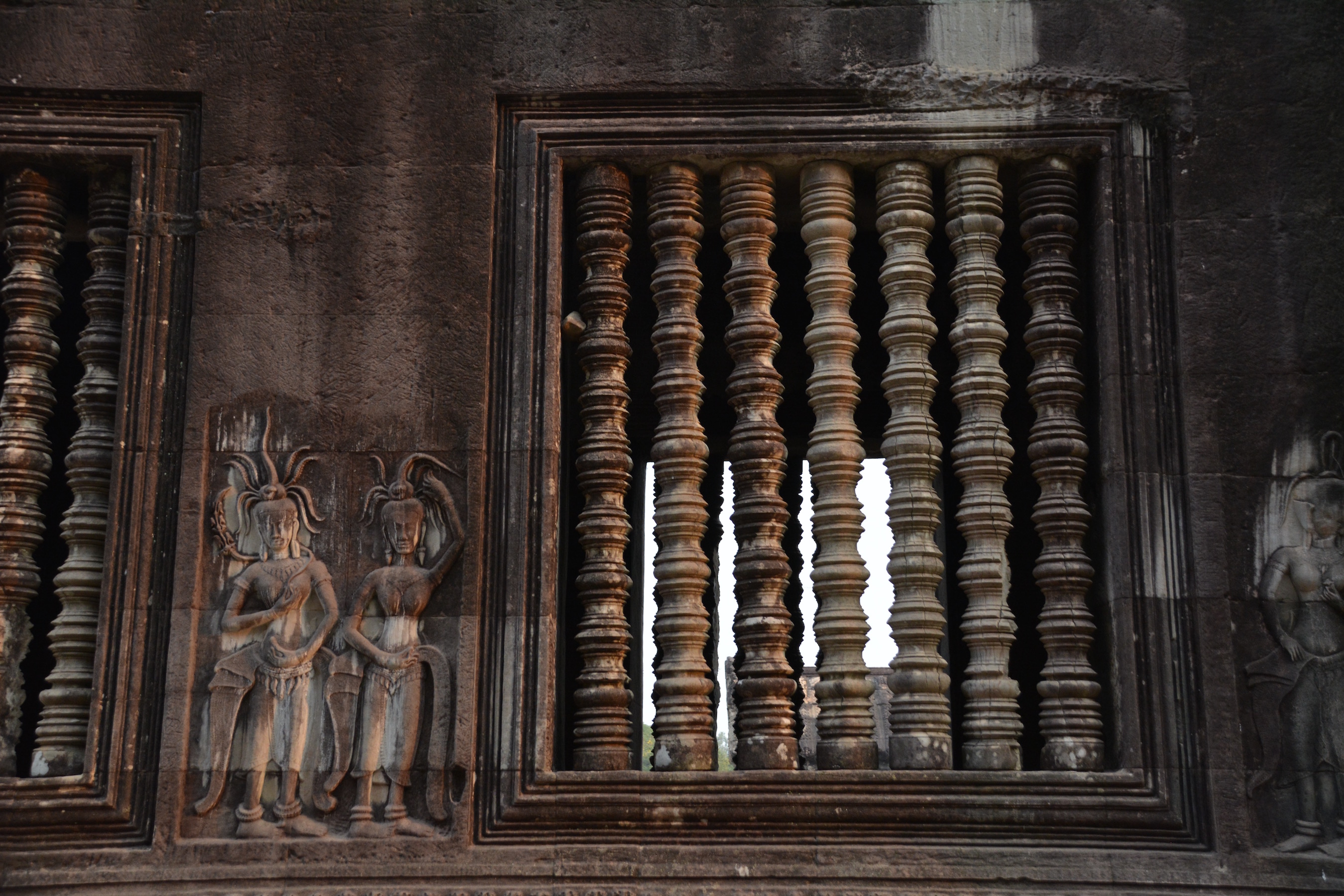
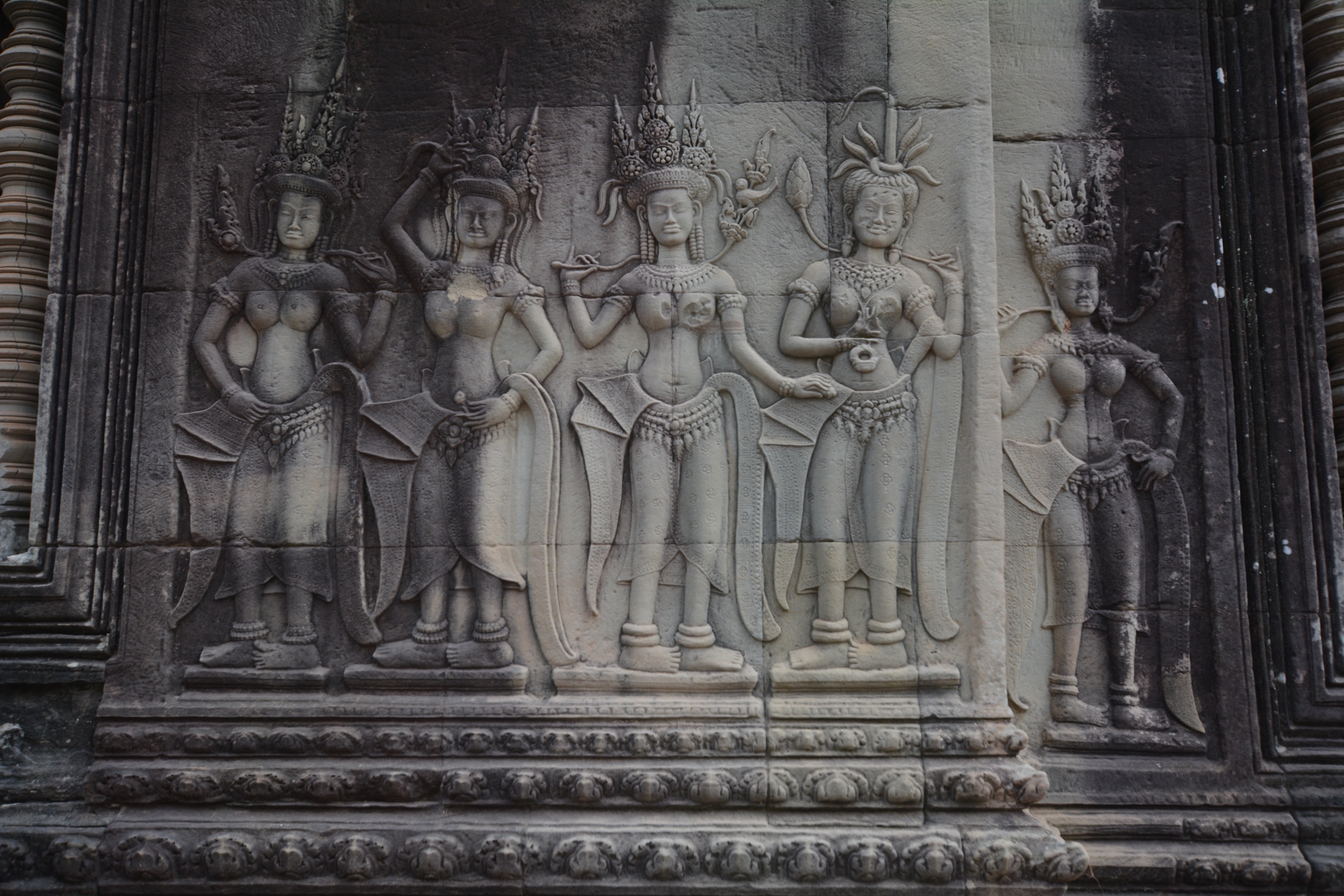
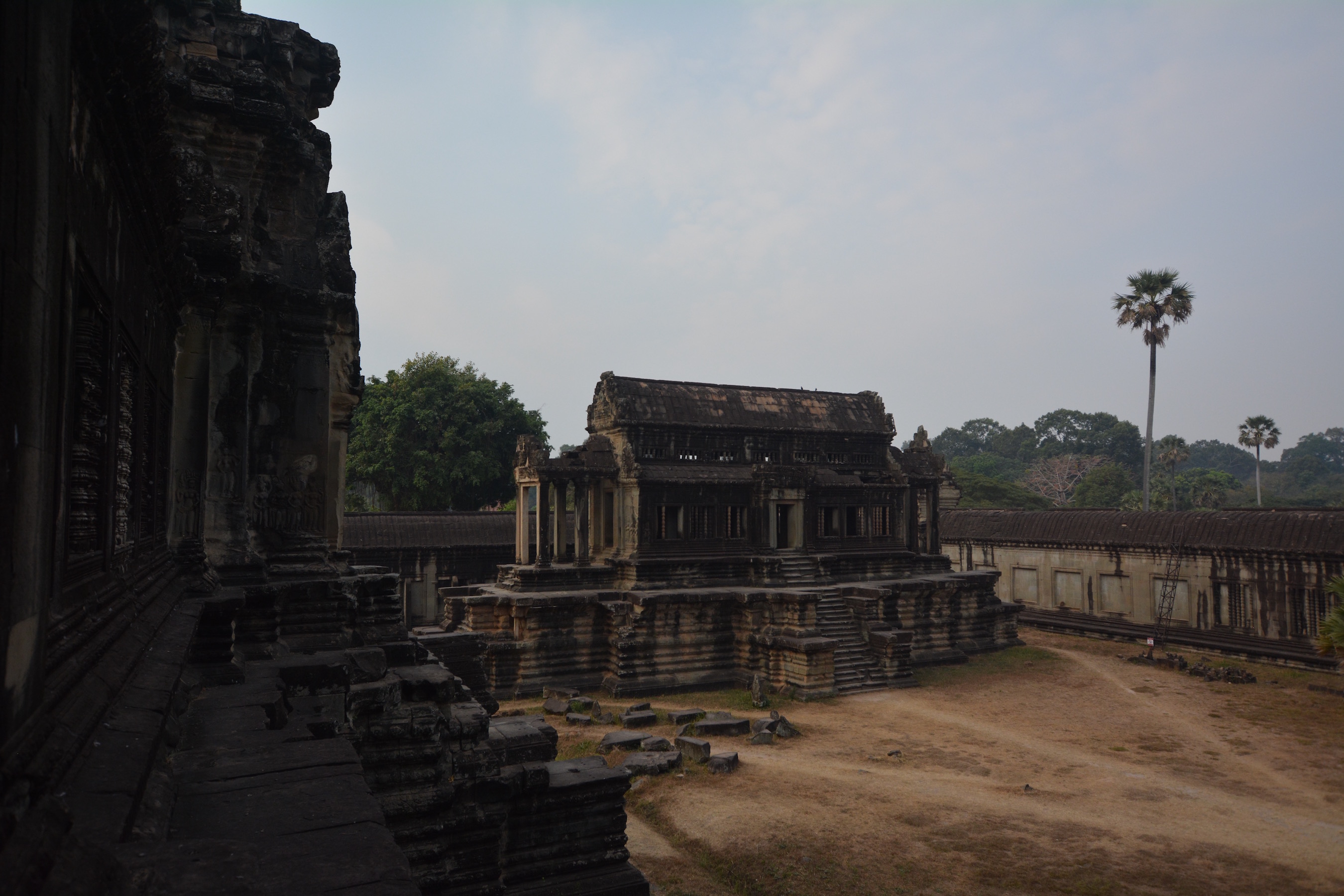
I’m shocked by how intact Angkor Wat is. For having been abandoned 600 years ago travelers can still lose themselves in ancient corridors, scale multi-storied staircases and stumble upon neverending intricately carved sculptures. I could throw a few quilts down at my feet no matter where I stand, drink some wine and eat some cheese, and this would be the most luxurious place I’ve ever had a meal. In its heyday it must have been exquisite.
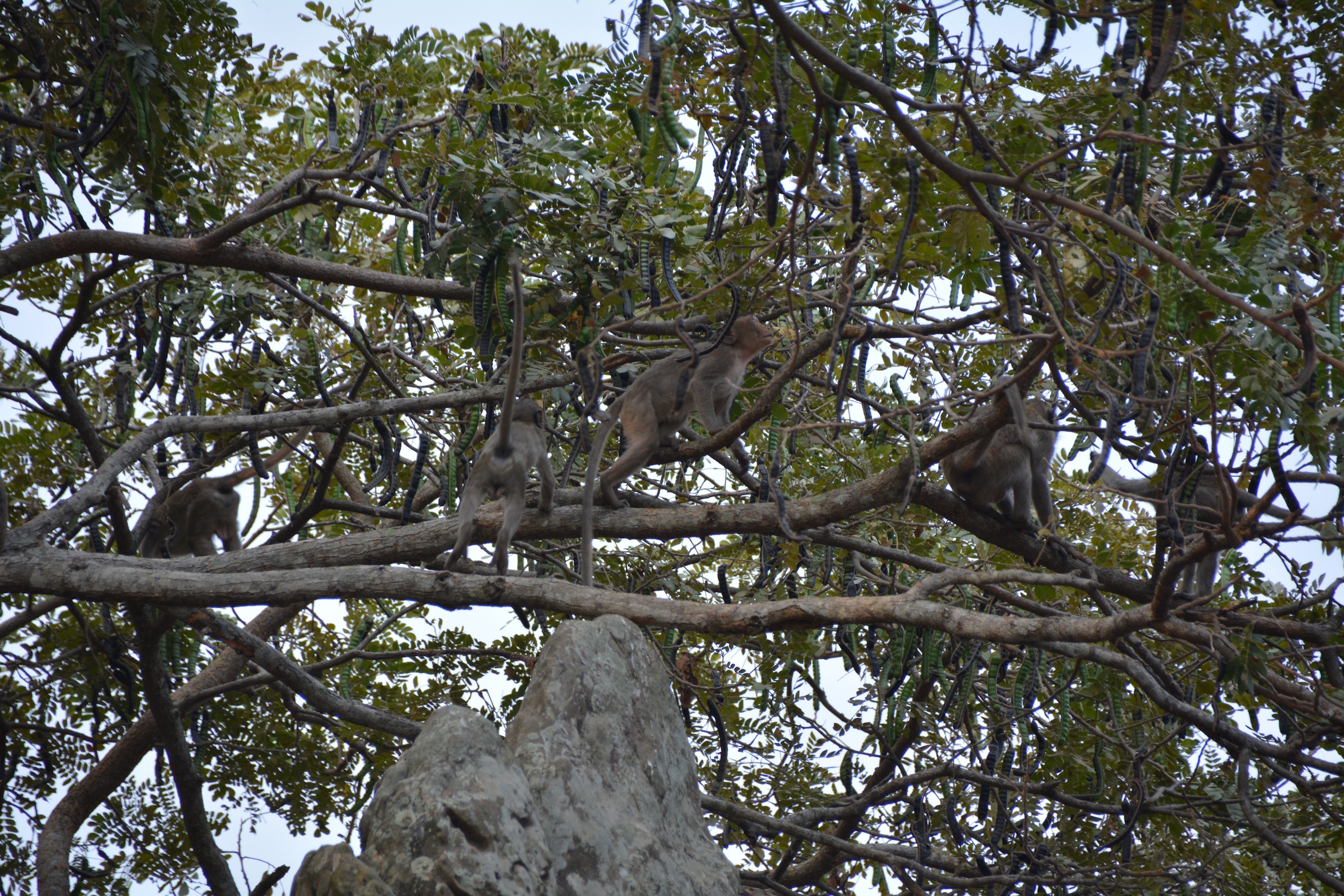
This picnic fantasy is broken by the sight of monkeys looting trash cans. They chug half-drank cups of sugar palm juice and bury their face into chip bags. Macaques: The raccoons of Cambodia.

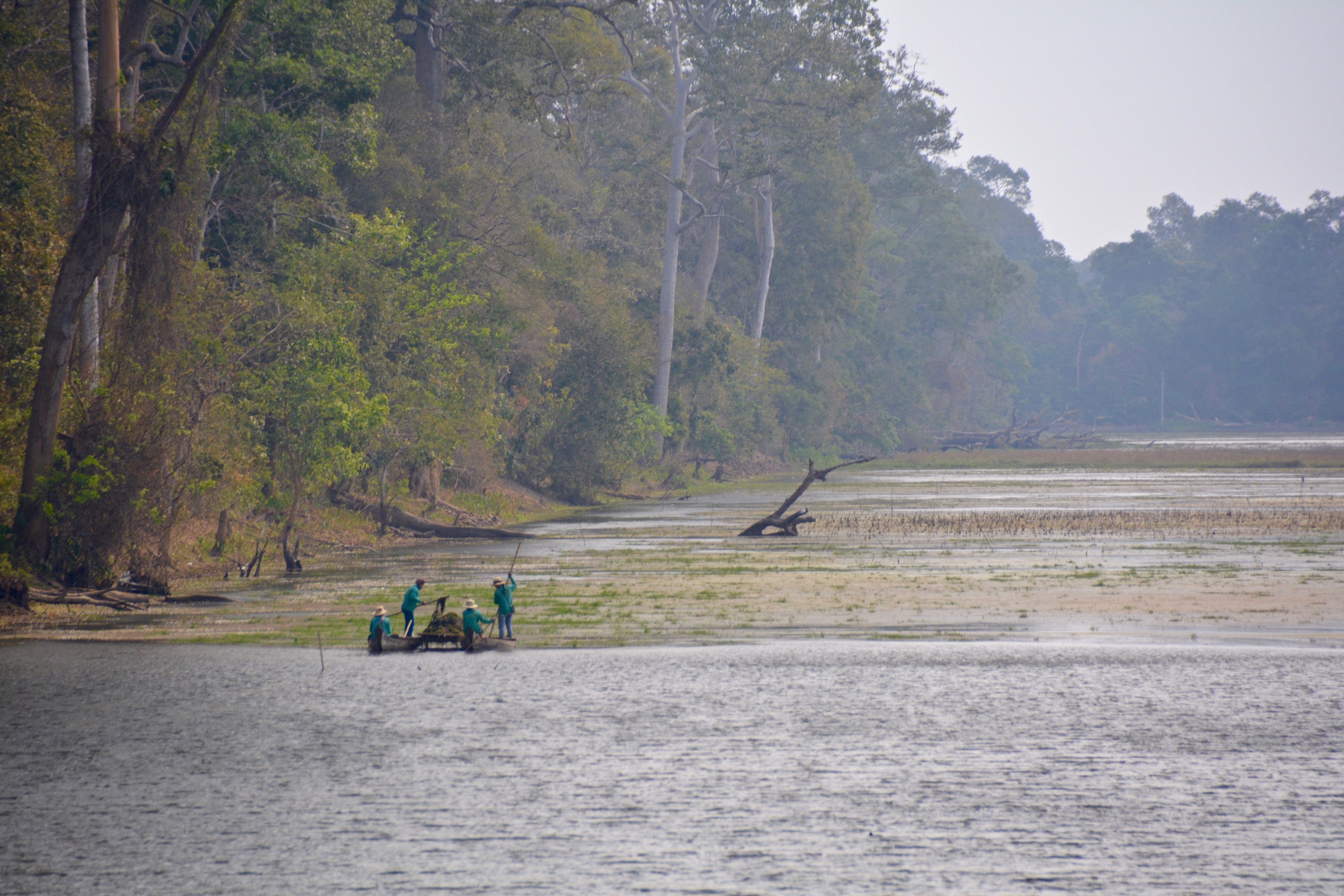
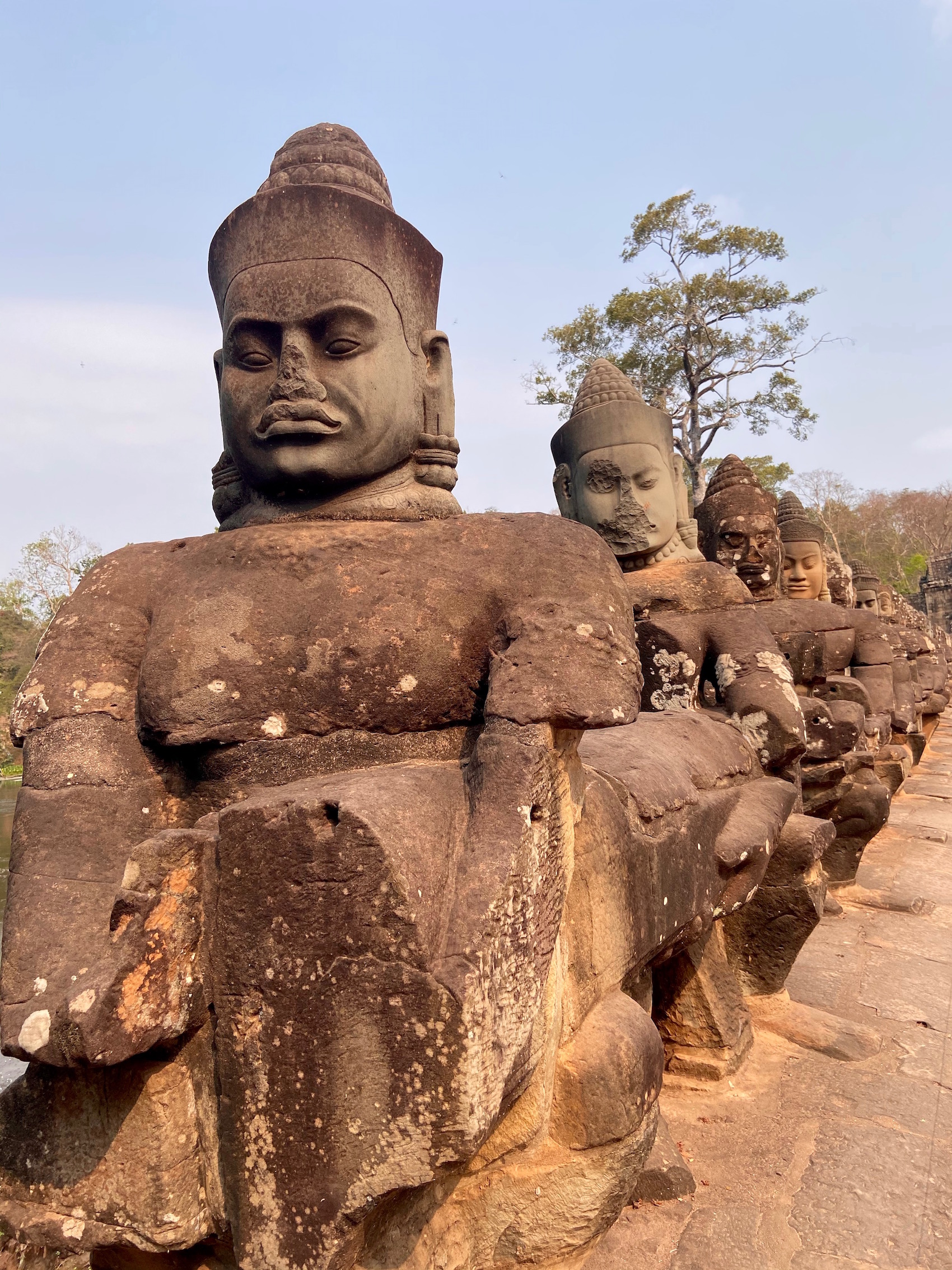
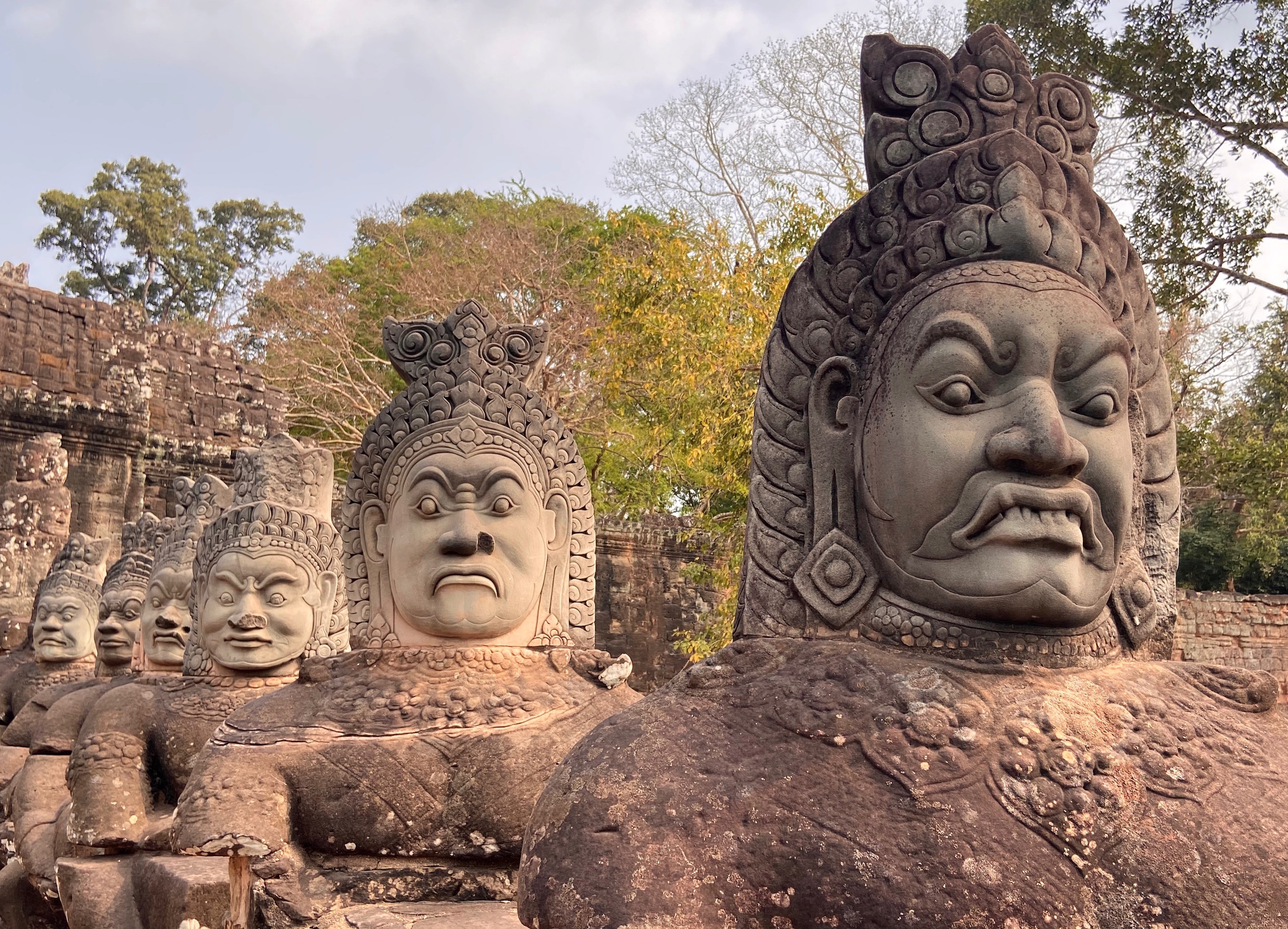
Bayon temple is our next stop. The bridge to enter the temple is guarded on each side by rows of guardian deities. Though most have heads with broken faces or missing noses, each statue wears a different expression. Some are serene. Some menacing. Some look like they’ve stubbed their toe or found moldy yogurt in the fridge.
I’d describe Bayon as a whole lotta buddhas assembled from a whole lotta rocks. His smiling face, built from hundreds of carved rocks, towers four stories above us at all times. There are many of these buddha towers throughout Bayon, and because the faces are four-sided and stare out from every direction, you’re always under his watchful gaze.
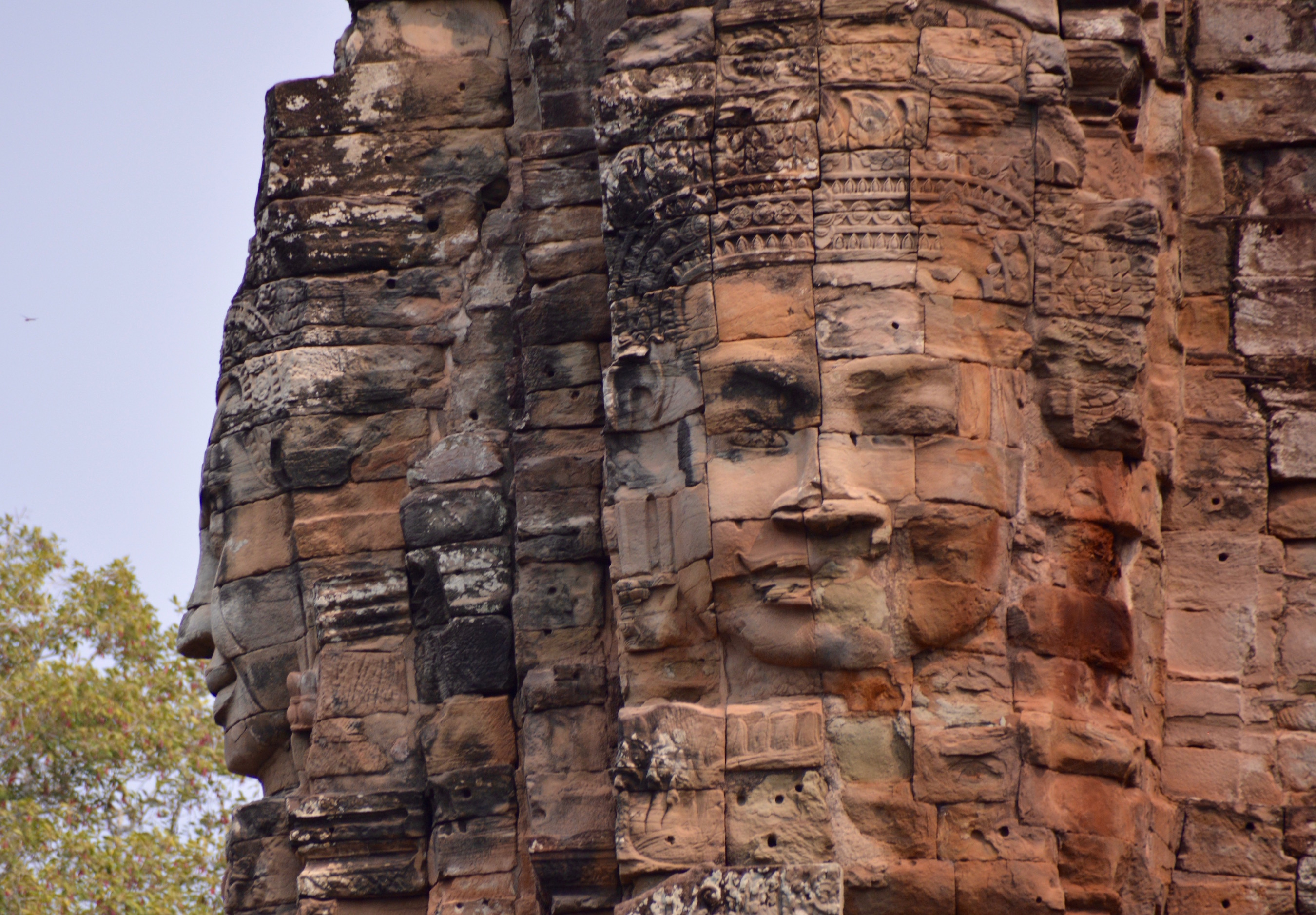
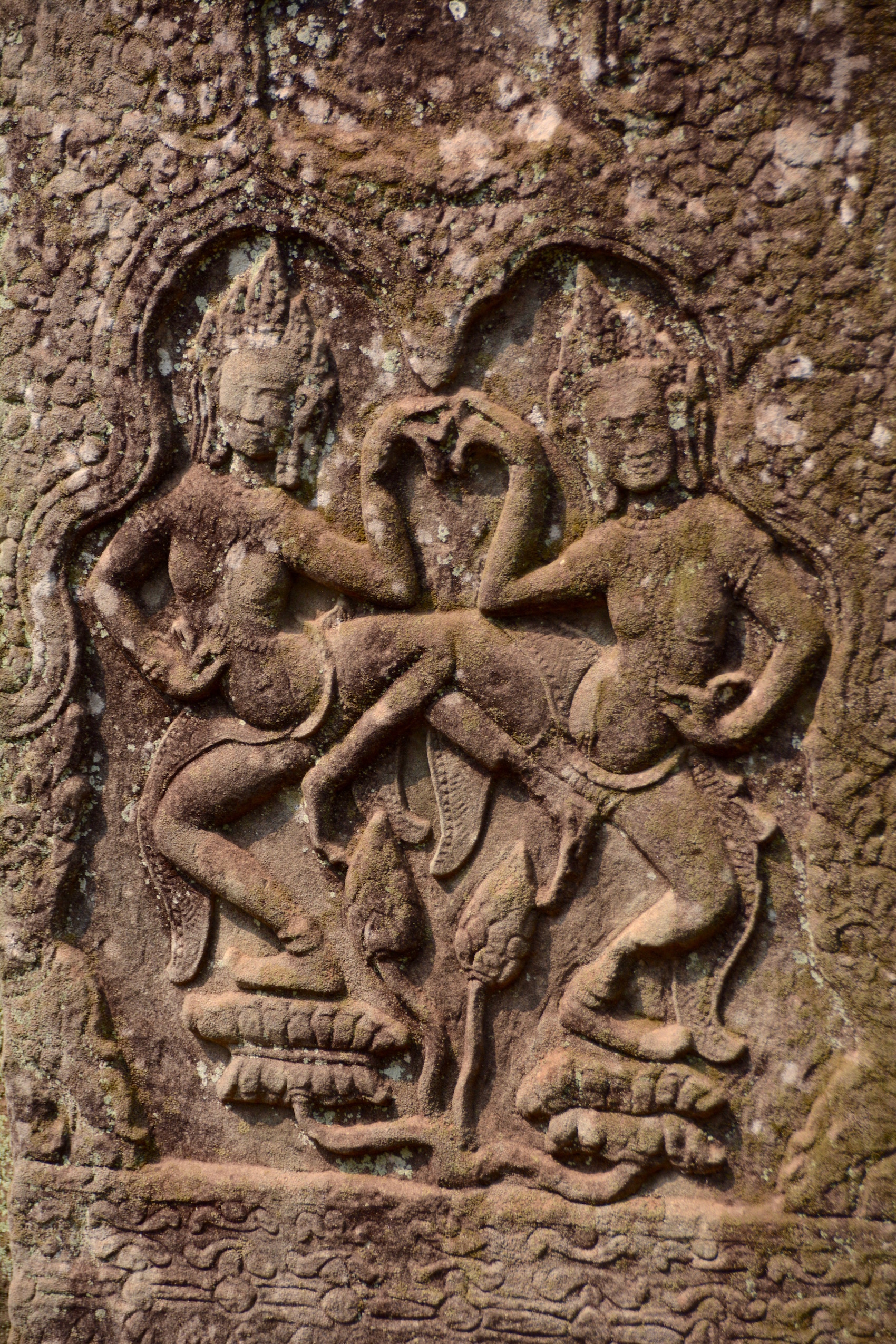
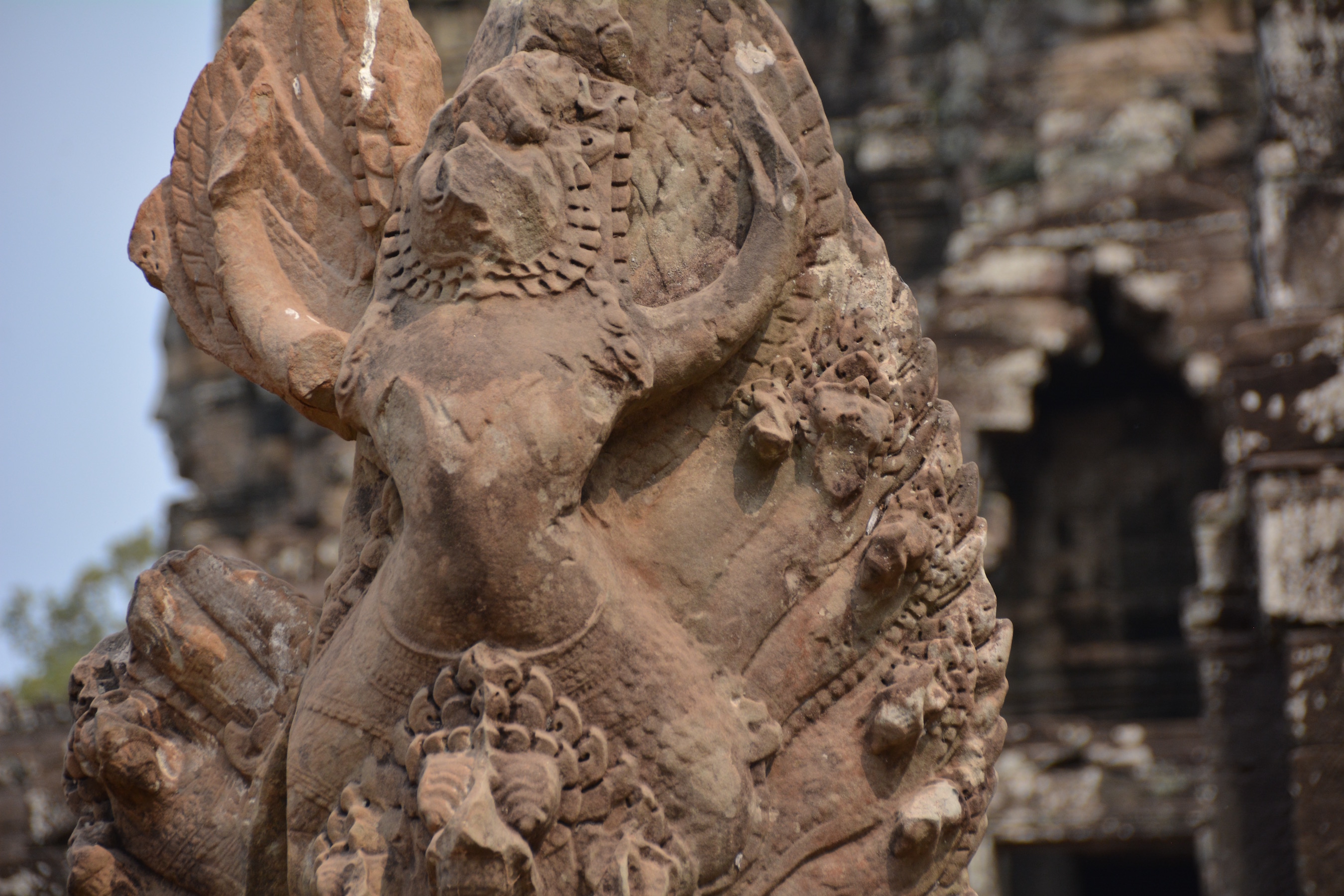
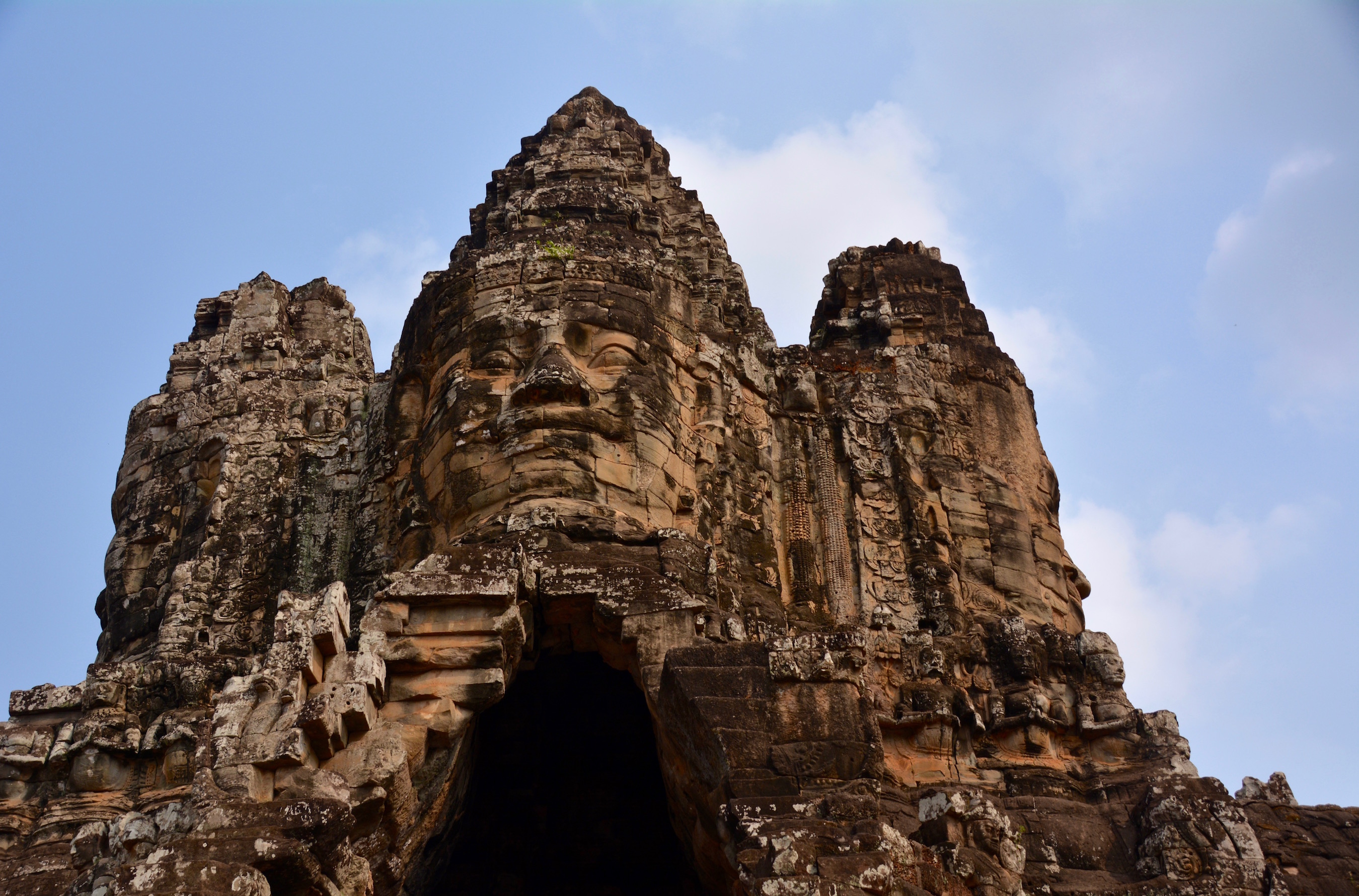
These rock faces bring about a serious pang of nostalgia for me as I’m reminded of my early childhood obsession, Legends of the Hidden Temple — The Nickelodeon show hosted by the eternally denim-shirted Kirk Fogg who’d converse with a face formed by rocks, beset with glowing red eyes and a deep voice booming from its stone lips.
Episodes featured duos of middle schoolers battling through obstacle courses and trivia rounds. The losing team would take home 90’s-tastic consolation prizes like VHS tapes, Hush Puppies shoes and $50 worth of Nestlé Quik while the winning team went onto the final challenge, a Herculean effort dubbed the “temple run”. Team members would climb and zipline their way through a soundstage temple. Those who made it through and completed the hallowed monkey puzzle would receive eternal glory and maybe a trip to Space Camp.
At any point during the temple run, masked and headdressed men would burst from walls like the Kool-Aid man and grab the children, dragging them into the darkness. Given that guards could be paid off with pendants contestants obtained earlier in the game and that the producers control the supply of pendants to temple guards, this show taught children early on that the system is rigged unless you’re loaded. On my first watch I legitimately thought I witnessed a murder as I watched a thrashing child pulled into the abyss, until I saw that same kid a few minutes later smiling and waving to the camera.
Looking back, the show’s cool appeal has been replaced with pure nostalgia. At the time I saw the contestants as vikings, when in reality they were gangly legged 12 year olds in helmets and mouthguards. Only 32/120 teams successfully completed the temple run in the show’s history which is total bullshit. The least you can do when you traumatize a kid with a simulated abduction is to reward them with a dude ranch vacation.
I promised myself that I’d illustrate the rock faces I saw at Bayon when I got home. I never did. So here’s a few not-so-inspired photos of what I saw:
Dinner is fish amok, a steamed fish curry with a mousse-like texture —the national dish. If you asked me prior to this trip if I wanted to try snakehead foam I would have made a questioning face. At the Sugar Palm restaurant, the dish is transcendent. It’s served in a banana leaf wrapper alongside steaming rice and absolutely explodes with flavor. Imagine the best fish you’ve eaten, now imagine it bursting in 10000 tiny bubbles on your tongue. I think we should amok-ify all savory dishes to create steak mousse, mac & cheese mousse, chili cheese dog mousse. Why this is uncharted territory I don’t understand.
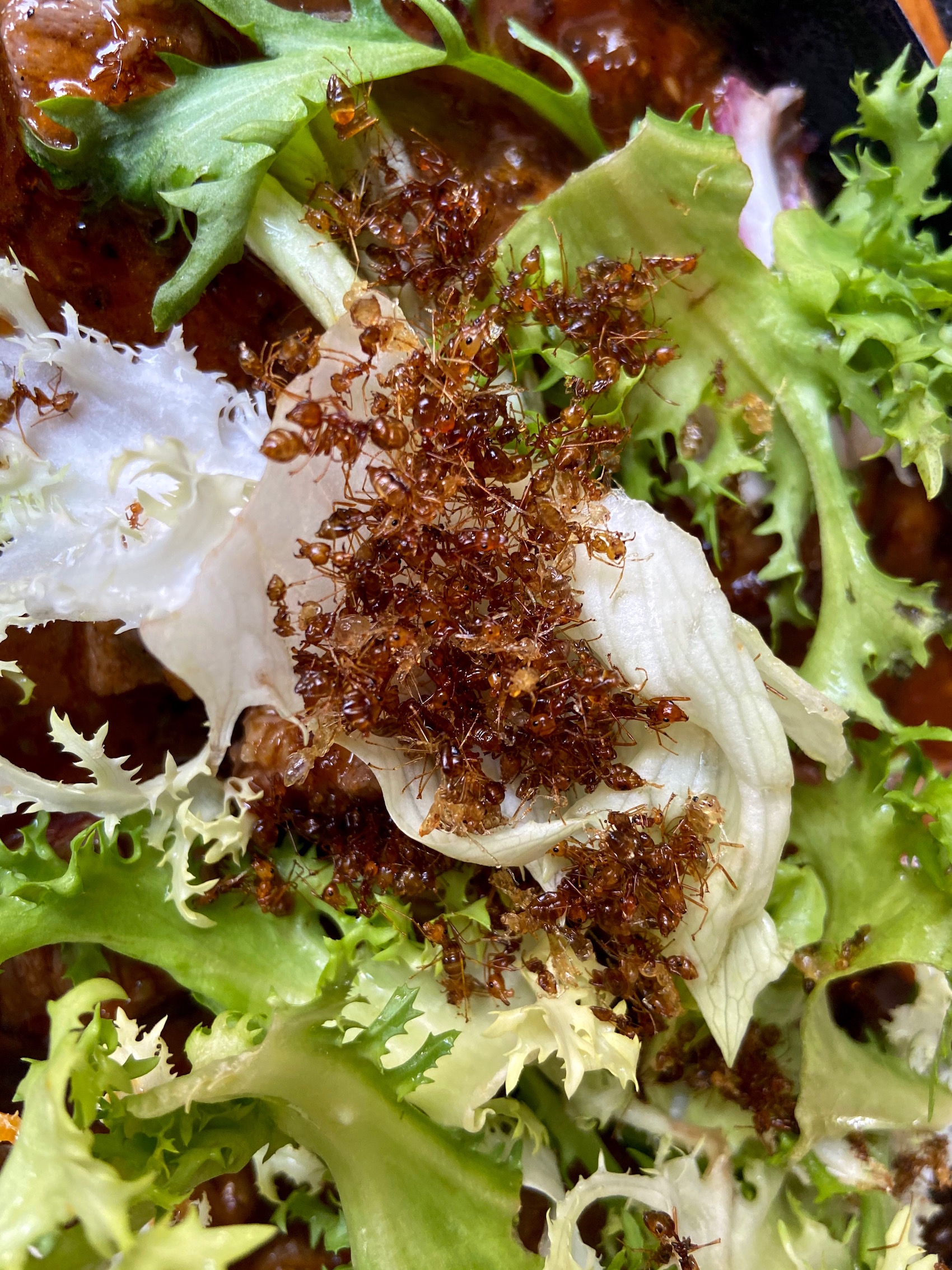
Food-wise, this is the best thing I tasted in Cambodia. The most interesting thing I ate in the country was lunch the next day: red ants with beef which we had in the Siem Reap brewpub. The craft beer wave has been expanding across the globe since 2010 when Hill Farmstead opened in Vermont. Prior to that time the most exotic draft you could order in your average Craft Beer bar in NYC was Blue Point toasted lager. In 2020 (just weeks before Covid became a global pandemic) you could land in any major city on Earth and find a local brewery. And so we found ourselves in an empty, 4000 square foot brewery in Siem Reap’s old city center at lunch, chowing down on beef smothered in a chili lemongrass sauce and tossed with red ants. In name, this is one of the odder dishes I’ve eaten, but in the mouth, there’s nothing too exceptional happening. The ants contribute texture to the dish, but not flavor. They take the place of toasted rice or even a potato chip. A friendly crunch.
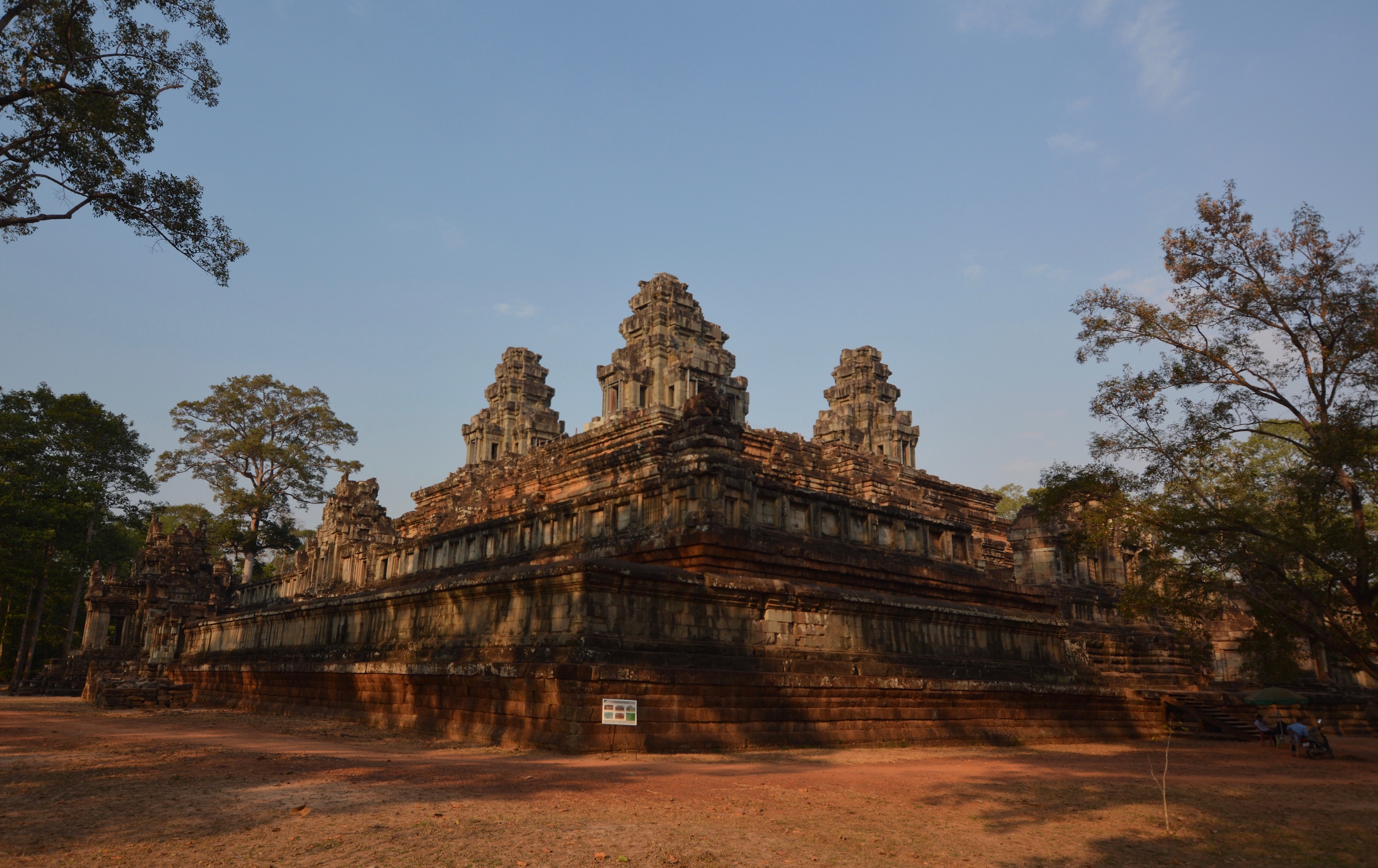
At Ta Keo temple we see maybe half a dozen others over an hour. It’s many staired and more symmetric than the other more organically built temples. The majority of Cambodian temples are built like cities of old, when a road’s blueprint was meant to intentionally confuse invading armies. In the U.S. we’re so used to gridded metropolises that when a neighborhood is bifurcated by a bridge we think “What is this shit?”.
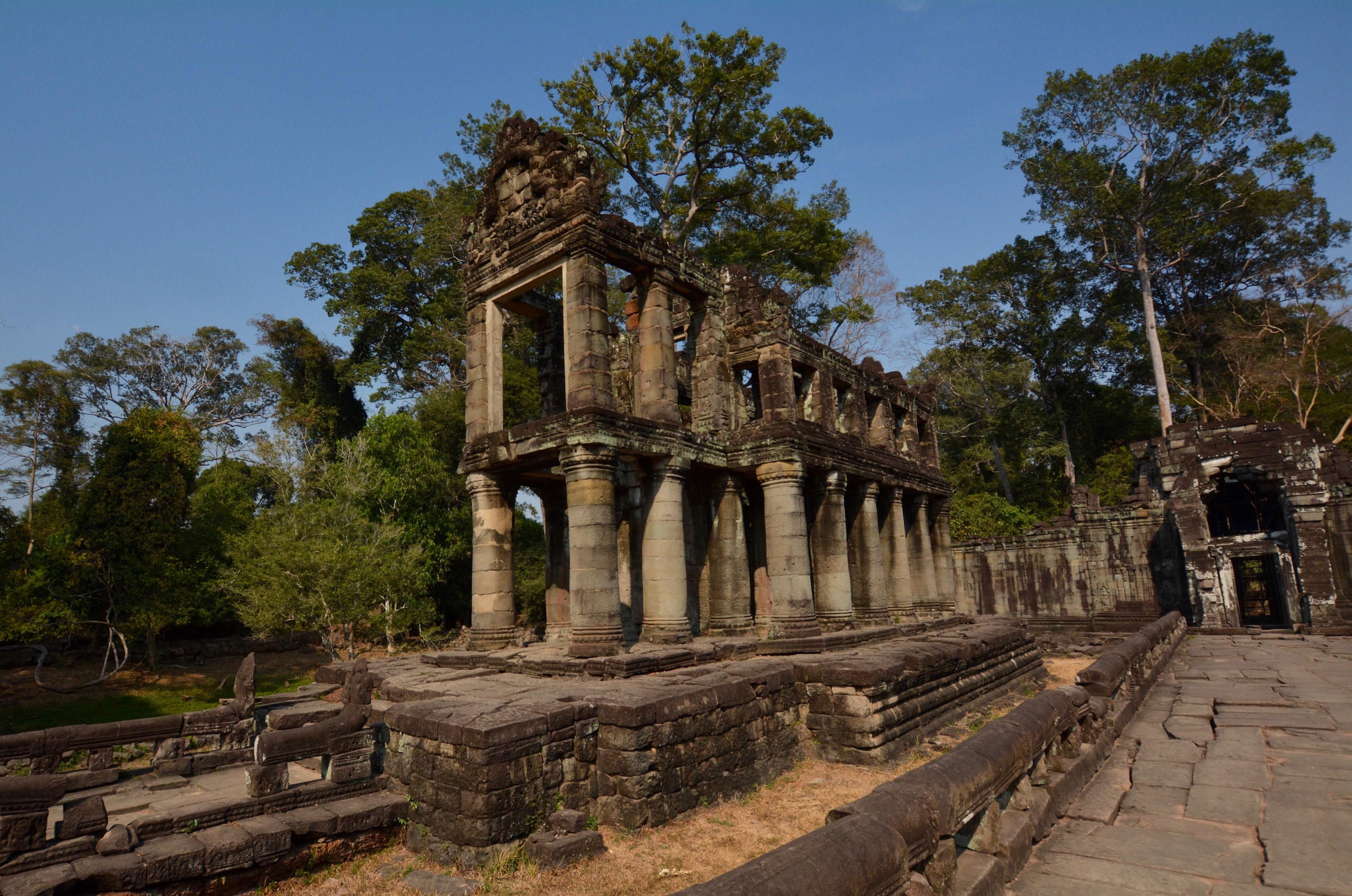
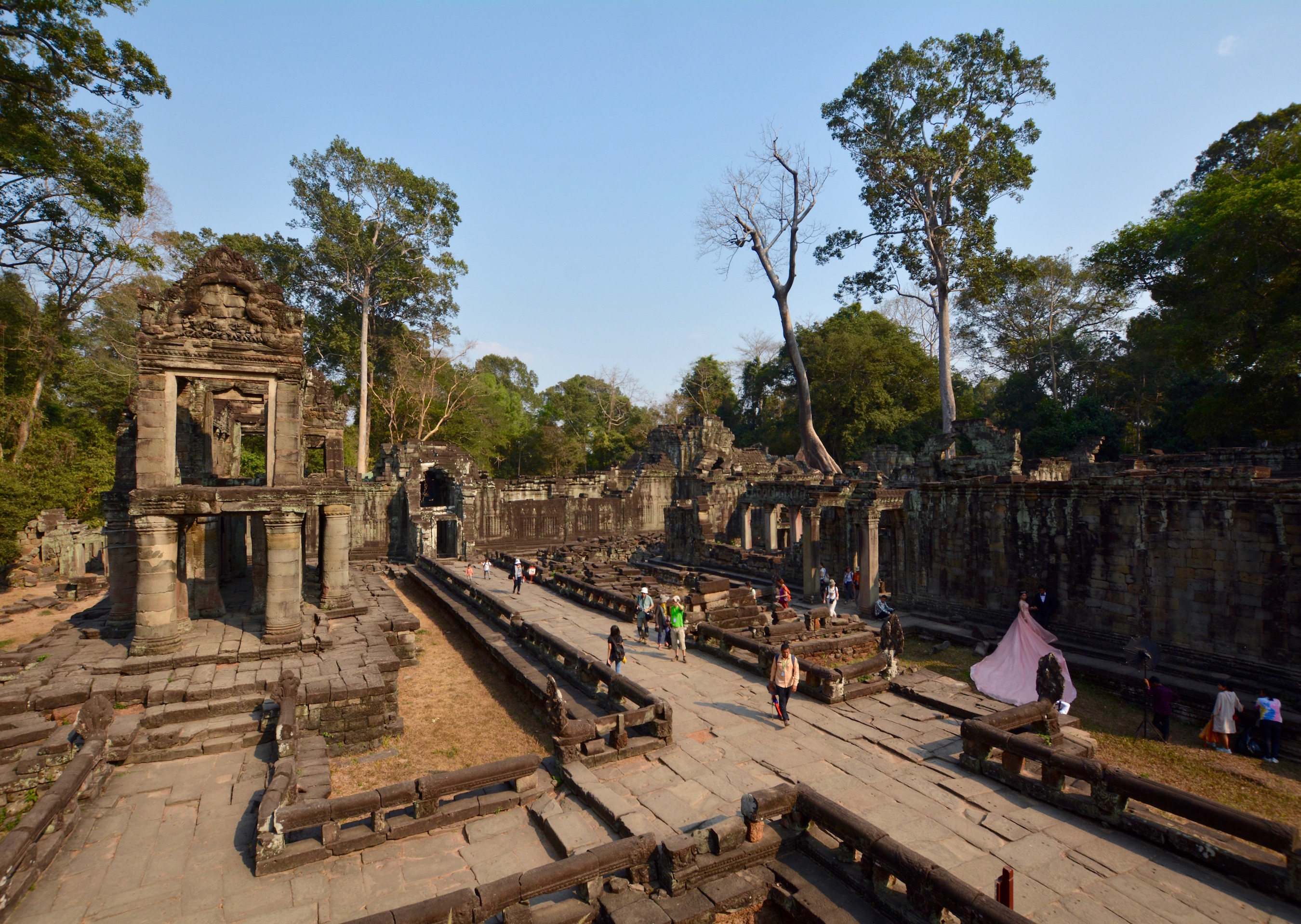
The last temple we visit is Preah Khan, whose current state feels more ruined than the rest of the ruins we’ve seen thus far. Not to try and crown a king of the days past, but little remains other than a columned structure that feels almost Grecian. In its shadow is another couple taking wedding photos. This bride wears a blush gown with a massive trail that spills out, cotton candy converging with the stones. She’s tiara-ed and beaming and everyone in sight pools around the couple, caught in their white smiled orbit. I watch for a few minutes until I spot a small altar of incense and pull away.
I light a stick and though I’m not a religious person, I say a small prayer for my grandparents. I’m in that stage of grief where I’ll look at a statue and think “that’s gorgeous!” then have a sudden pang in my chest when I realize that someone I love is gone. It’s true that wherever you go, there you are. I’ll miss a funeral. I won’t smell the arrangements of gardenias and orchids or be with my grandmother as she lays her husband of 60 years to rest.
The guilt is extreme. I wonder if I’m being disrespectful by not staying in my hotel room. Or by not attempting to fly home 3 weeks into a 12 week trip abroad even though Frankensteining flights together would lead to something like 37 hours of travel time. I remind myself that prior to getting on a plane my grandfather was incredibly excited for my trip. How I’d mailed a postcard from Taipei addressed to his name just 10 days ago.
I don’t know if I’m wrong to think of Nickelodeon television moments before memories of my grandfather flood my mind. If it’s heartless to savor fish amok or shallow to enjoy the patterns and colors of my surroundings. I’m excited for what’s next while longing for what’s irretrievably gone. Travel doesn’t exempt us from the emotions boiling inwardly. It only processes what’s already there through a foreign backdrop.
 american-alchemist